
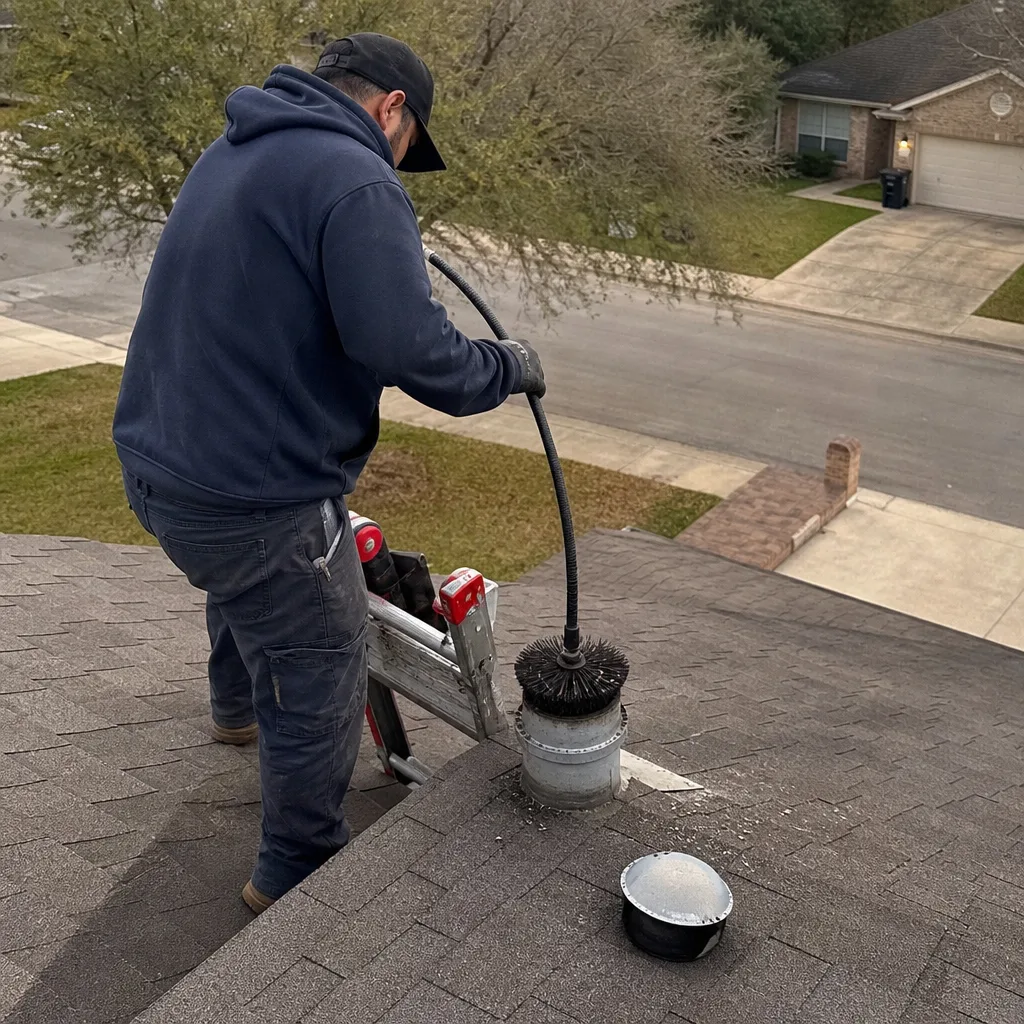
Last updated October 15, 2026
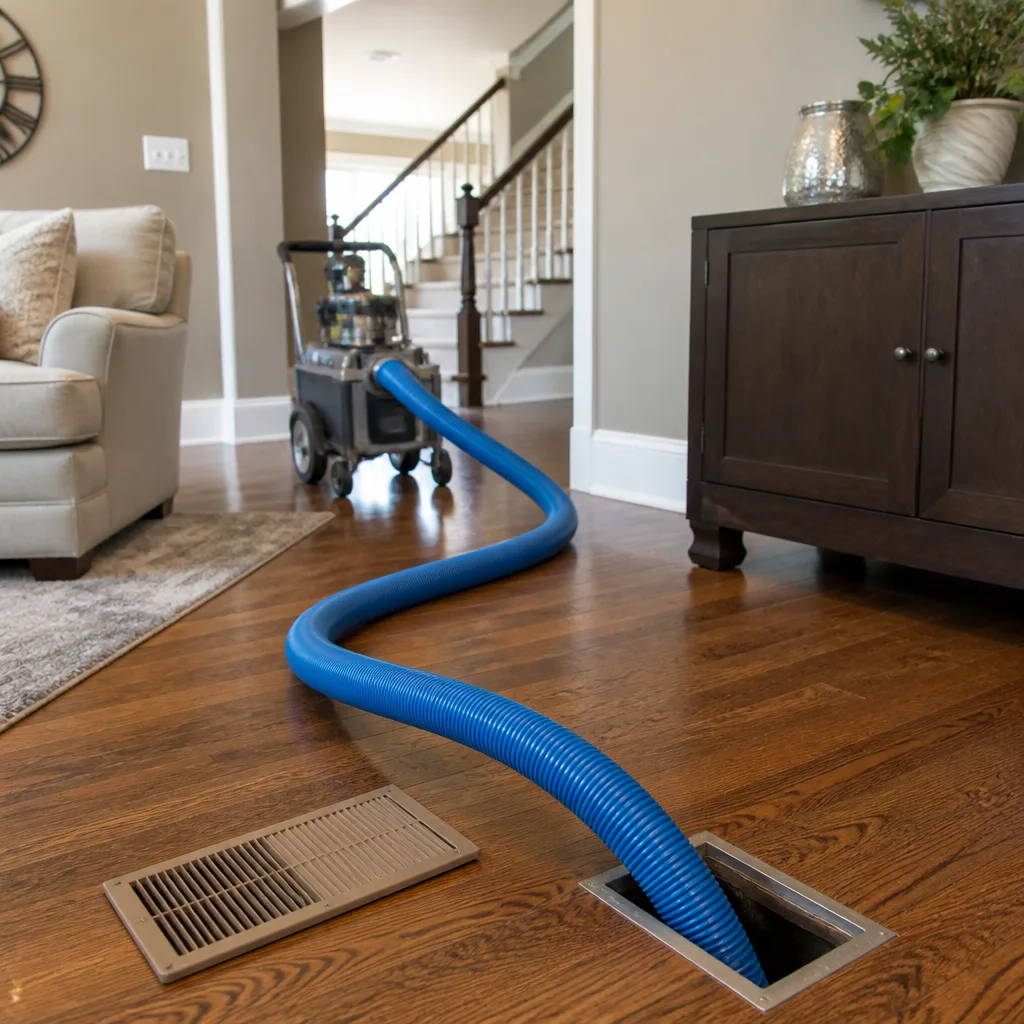 Whole-home duct cleaning
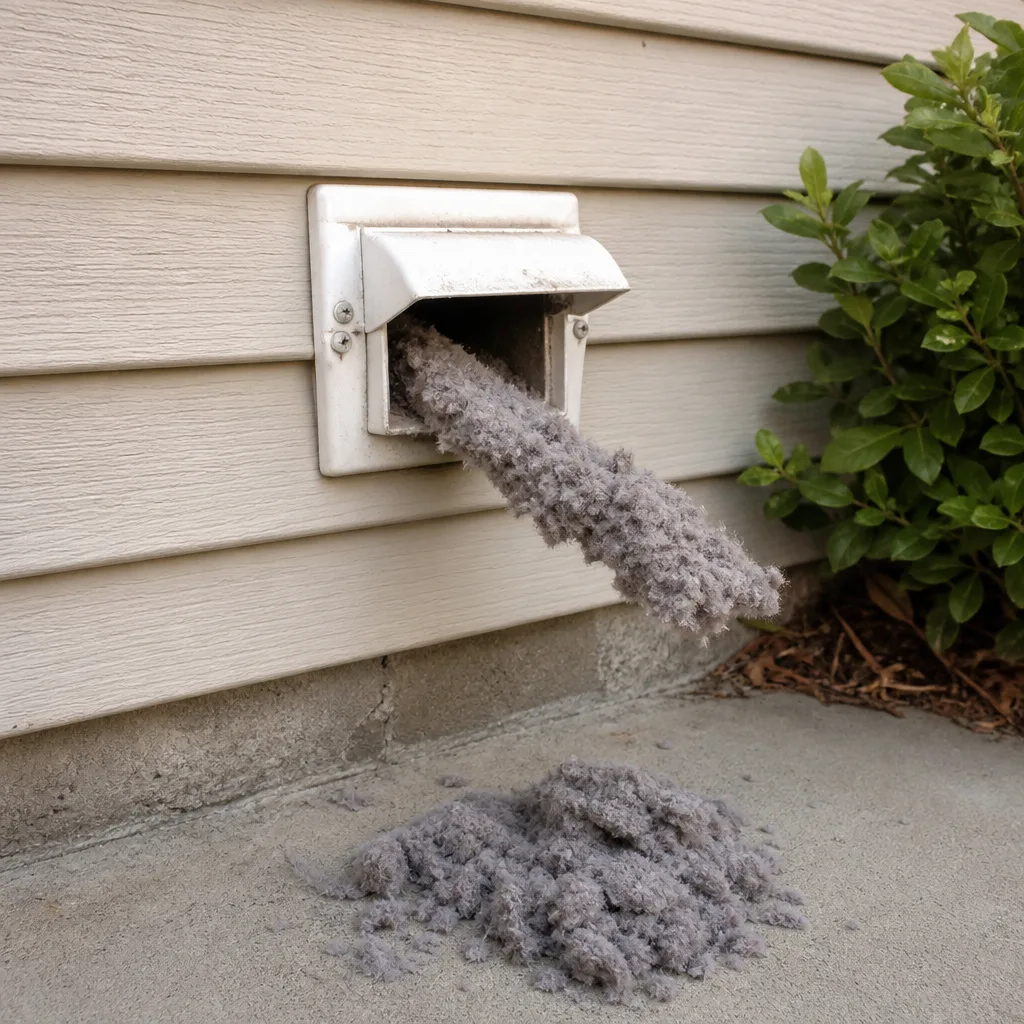 Dryer vent cleaning
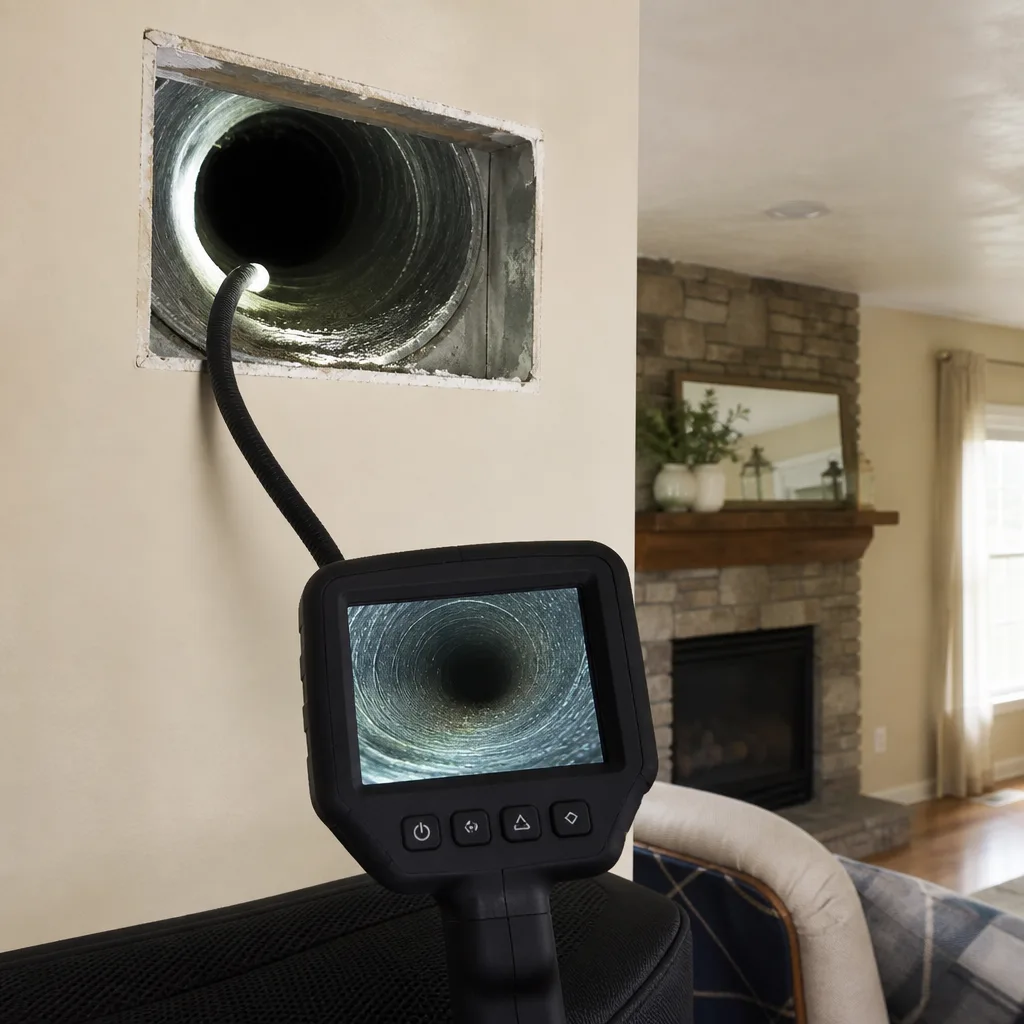 Camera inspection
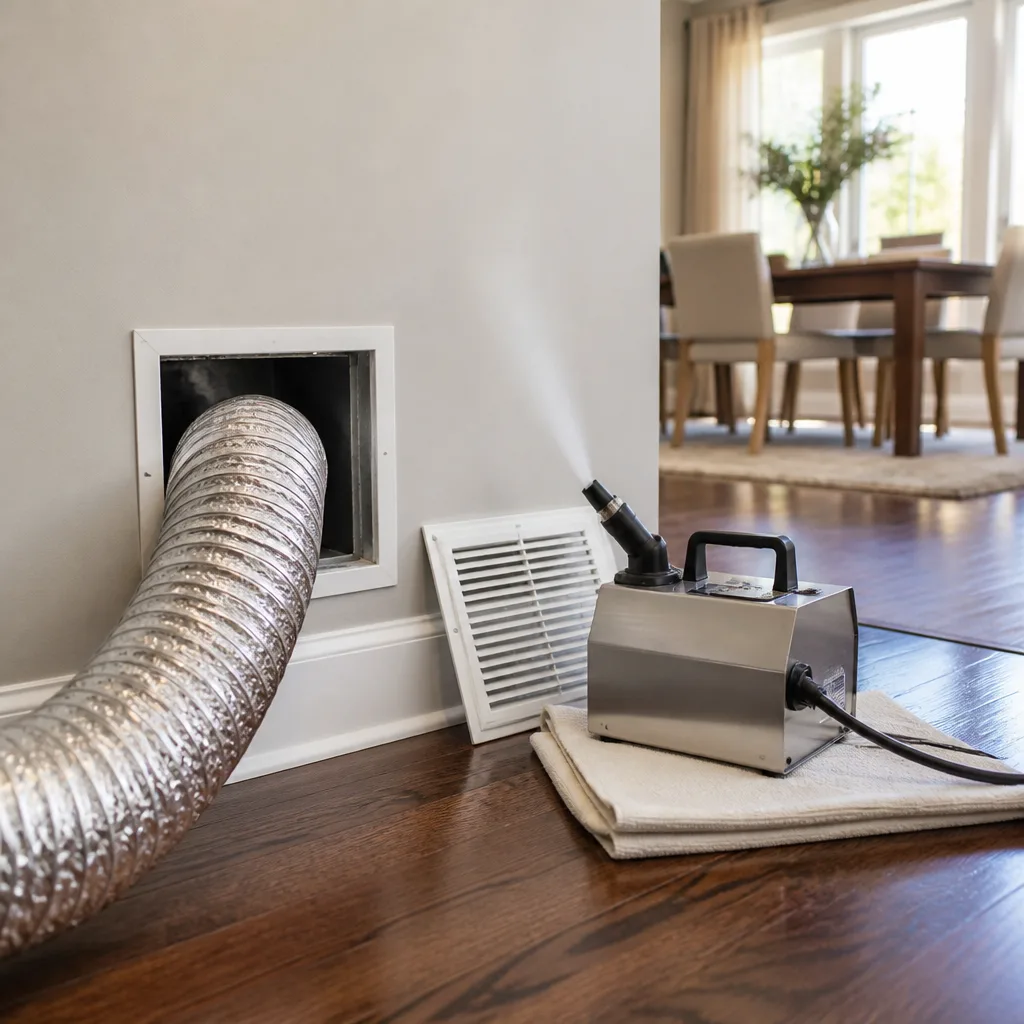 Sanitizing & deodorizing
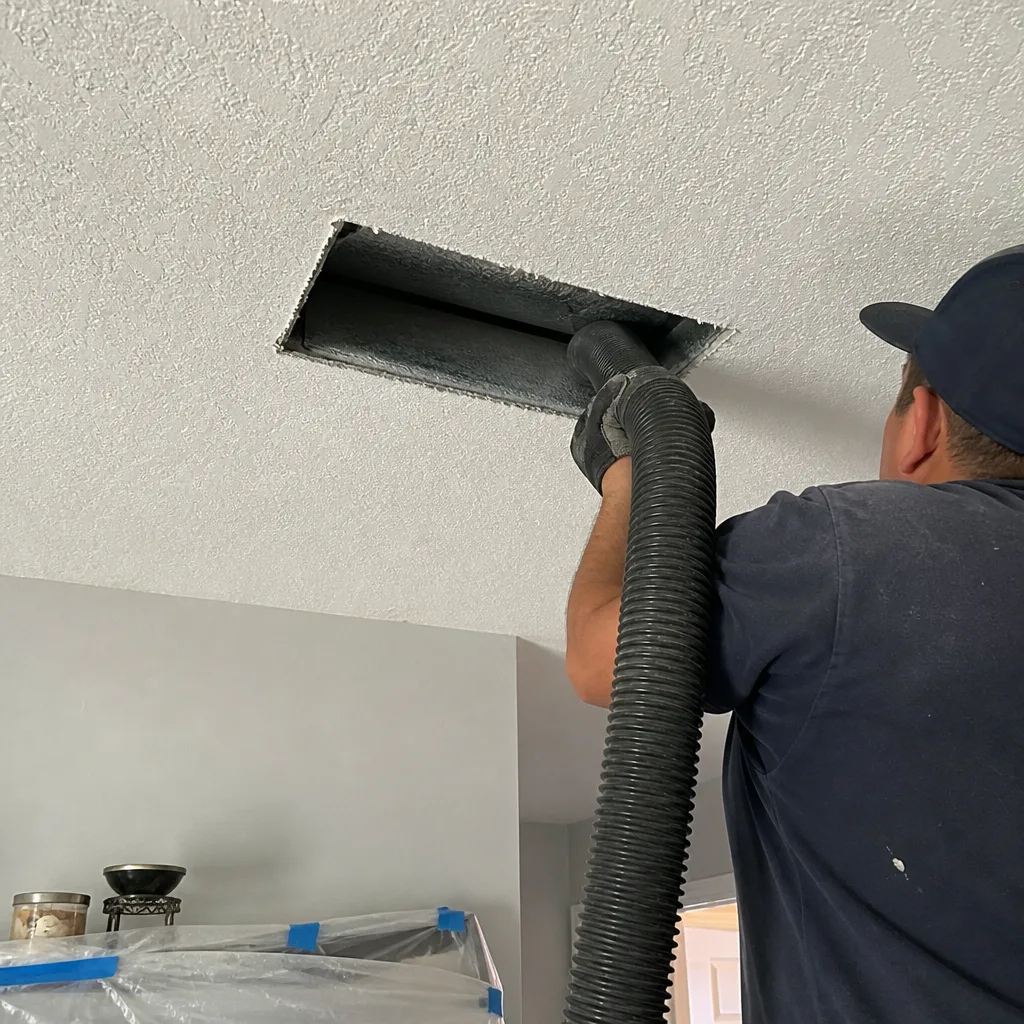
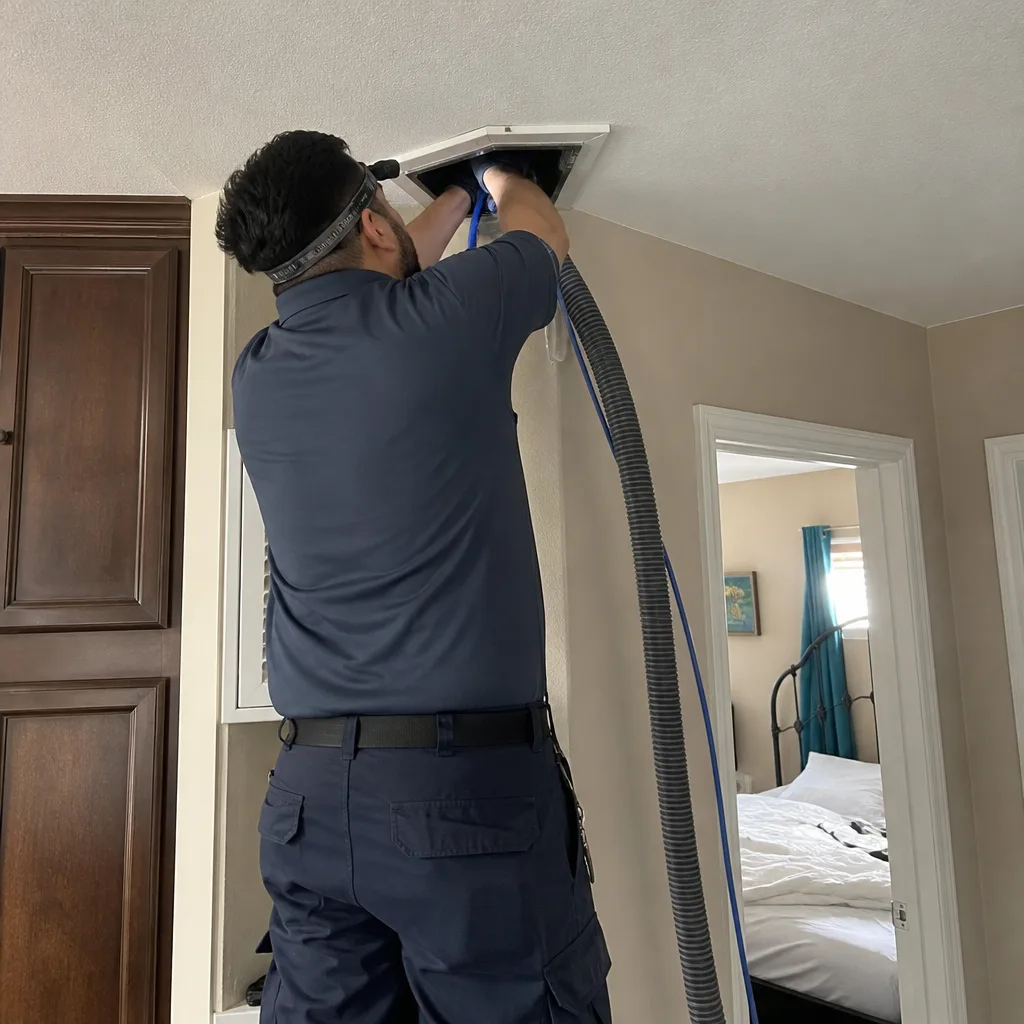
Whole-system duct and dryer vent check with before-and-after photos - you see exactly what came out of your vents
That "$99 whole-house special" is a bait ad - the real number appears once they are in your hallway, or the "clean" is a shop-vac at the register. We photograph the inside of your ducts before and after instead.
How to Hire a Air Duct Cleaning Contractor in San Antonio: A Step-by-Step Guide
The HVAC duct cleaning industry has no mandatory licensing requirement in Texas, which means the company quoting you $49 for a whole-house clean and the company quoting $450 are operating under identical legal standing. The only difference is what they actually do once they’re inside your home. San Antonio’s hot, humid climate and cedar-heavy air make duct cleaning a real maintenance need, not a luxury upsell, but the low barrier to entry has filled the market with operators who count on homeowners not knowing what to check. This guide-along with our Seasonal Air Duct Cleaning Care for San Antonio: Year-Round Homeowner’s Guide-walks you through a specific vetting sequence you can run before anyone steps through your front door.
Styles & brands we work with
Quick Answer
To hire an air duct cleaning contractor in San Antonio, verify the company’s legal business identity through the Texas Secretary of State, confirm they carry general liability coverage with adequate per-occurrence limits, require a written whole-system price before booking, and demand the technician’s name and photo before arrival. A legitimate San Antonio duct cleaner will answer yes to every one of these checks without hesitation; a bad operator will stall on at least two of them.
Table of Contents
- Why Duct Cleaning in San Antonio Is Different
- Step 1: Verify the Business Identity
- Step 2: Check Insurance and What It Actually Covers
- Step 3: Interrogate the Pricing
- Step 4: Read the Service Agreement Before You Sign
- Step 5: Vet the Technician Who Shows Up
- Step 6: Run the Day-Of Protocol
- Common Mistakes to Avoid
- When to Call a Professional
- Frequently Asked Questions
- The Bottom Line
Why Duct Cleaning in San Antonio Is Different
San Antonio’s climate does two things to your ductwork that a generic national guide won’t tell you. First, the humidity. We sit in a subtropical zone where indoor relative humidity regularly runs above 60% for months at a time. That moisture settles inside return ducts, and when it combines with the fine limestone dust that blows in from the Hill Country and the construction activity that never stops along 1604 and IH-10, you get a paste that clings to duct walls. A duct system in a Stone Oak home built in 2015 can be as loaded as a 1990s system in Alamo Heights, simply because the newer home’s tighter envelope traps more particulate indoors.
Second, the allergens. Mountain cedar season in San Antonio runs from December through February, and it’s brutal. Cedar pollen is small enough to pass through a standard 1-inch fiberglass filter, which means it circulates through your ducts and settles there. Then it gets redistributed every time the blower kicks on. The same applies to oak pollen in March and April. If anyone in your household has allergy symptoms that seem to spike indoors, the ducts are often the reservoir. That’s not marketing language; that’s what we’ve seen in San Antonio homes across neighborhoods from Helotes to Terrell Hills.
What this means practically: in San Antonio, duct cleaning is a maintenance service with real health and efficiency consequences, not a cosmetic upsell. But because Texas does not require a state license for duct cleaners, the market is flooded with operators who know the climate arguments and use them to sell jobs they’re not equipped to do properly. The guide below is built around the specific checks that separate legitimate operators from the rest.
Step 1: Verify the Business Identity
Before you ask about pricing, before you look at reviews, before anything else, you need to confirm that the company you’re talking to is a real legal entity with a real presence in San Antonio. This takes ten minutes and eliminates a meaningful share of the worst actors.
What to check:
- Texas Secretary of State lookup. Search the company’s exact name in the Texas Comptroller’s taxable entity search (accessible for free at the Texas Comptroller website). If the entity doesn’t appear, or the name they gave you doesn’t match any registered entity, that’s a conversation-ender. A sole proprietor doing business under a DBA should still show an assumed-name filing. No filing, no hire.
- Physical address, not a virtual office. Look up the company’s listed address. If it’s a Regus suite, a UPS Store box, or a co-working space that rents mailboxes, treat that as a yellow flag. A real duct cleaning operation in San Antonio needs a physical shop for equipment storage, vehicle parking, and supply inventory. Ask the person on the phone: “What’s your shop address, and can I see it on Google Street View?” A legitimate company will tell you without pause.
- BBB standing. Check the company’s Better Business Bureau profile for San Antonio. Look at the complaint count and, more importantly, how complaints were resolved. A company with 2 complaints over 5 years that both got answered is fine. A company with 14 unanswered complaints is not. BBB accreditation is not a quality guarantee, but an unanswered complaint pattern is a reliable signal.
- How long has the entity existed? The Texas Comptroller listing shows the entity’s formation date. A company that registered six months ago can still do good work, but a company that has operated under the same name in San Antonio since 2004 has a track record you can actually evaluate. Longevity is not automatically quality, but it does mean thousands of past jobs exist that would have produced complaints if the work was consistently bad.
Linden Air Duct San Antonio has operated within the Threshold Group family since 2004, which means the entity standing is verifiable through public records, and Marcus Veale, the owner, is a real person you can identify and reach. If a company cannot produce an owner name, a verifiable filing, and a physical address, you are not hiring a company; you are hiring a guy with a truck and a phone number that may not exist next month.
Step 2: Check Insurance and What It Actually Covers
The phrase “licensed and insured” is the most abused phrase in the San Antonio home services market. Texas does not license duct cleaners, so the first half of that phrase is often meaningless. The second half needs scrutiny too, because what the policy covers matters more than whether a policy exists.
What to request before booking:
- A certificate of insurance (COI) naming you as the certificate holder. The company’s insurance agent should be able to email this to you in minutes. The COI should list general liability coverage with a per-occurrence limit of at least $500,000, and ideally $1 million. Anything below that, and a dropped piece of equipment that damages a ceiling or a scratched hardwood floor could exceed the policy.
- Confirmation that the policy covers property damage inside occupied homes. Standard general liability covers the company’s operations, but you want to confirm the policy is for the specific trade they perform. Some operators carry a general policy that excludes work inside existing residential structures because the carrier classified them as a “cleaning service” and excluded it. Ask the agent: “Does this policy cover interior residential duct cleaning work, including damage to drywall, flooring, or the HVAC system itself?”
- Workers’ compensation or an equivalent. If a technician gets injured inside your home and the company carries no workers’ comp, your homeowner’s policy can become the target. Texas does not require private employers to carry workers’ comp, which makes this question critical in San Antonio. A company that carries it is protecting you from a category of liability you should not have to absorb.
What standard policies don’t cover:
- Pre-existing mold or moisture damage. If the company’s work reveals mold that was already present, removal is a separate remediation scope that a standard duct cleaning policy will not cover under their liability.
- Damage caused by the homeowner’s deferred maintenance. If a duct has corroded from years of condensation and it crumbles during cleaning, the carrier may argue the damage predates the work. A written pre-work inspection that documents condition protects both sides.
- HVAC system failure from age. If a 20-year-old blower motor seizes the week after cleaning, it is nearly impossible to prove causation. A responsible company will document system condition before and after, which benefits you more than them.
At Linden Air Duct San Antonio, we carry the coverage appropriate to the work we do, and we provide proof on request. If a contractor dodges the insurance conversation, that’s not shyness; that’s a gap you don’t want to discover after the fact.
Step 3: Interrogate the Pricing
Air Duct Cleaning Cost Breakdown: The San Antonio Homeowner’s Reference for 2026 explains why duct cleaning pricing in San Antonio currently runs across a wide band, and why the variance is not explained by equipment quality alone. A legitimate single-system whole-home clean in a typical 1,800 to 2,500 square-foot San Antonio house should fall somewhere between $300 and $550, depending on system size, number of returns, accessibility, and whether the job includes dryer vent cleaning as a separate service. That’s the honest range.
Below $100, alarm bells. The “$49 whole house special” you see on postcards and Facebook ads in San Antonio is a lead-generation mechanism, not a service price. The actual invoice arrives after the technician has created a problem narrative inside your home: “Your plenum has microbial growth, that’s an extra $600 for sanitizer,” or “Your main trunk line is 40 feet, the coupon only covers 15.” The $49 price exists to get a technician in your door, and once they’re there, the psychology works against you. This is the moving-company model, and it is endemic in San Antonio’s duct cleaning market.
Above $700 for a standard single system, question it. A premium price is justified only by premium verification: documented technician background checks, written guarantees, before-and-after photo documentation, and professional-grade equipment from manufacturers like Rotobrush or Nikro. If the high price comes with none of those, you’re paying a premium for the same job a legitimate operator does for half.
What to require:
- A written whole-system price before any work begins. Not a per-vent price, not a coupon, not a “starting at” figure. A single number for your entire system, in writing, before the technician unloads equipment. Every legitimate San Antonio operator can do this. Every bait-and-switch operator will resist it.
- Scope clarity. The written price should state exactly what is included: number of supply vents, number of returns, main trunk line, plenum, blower compartment inspection, and whether dryer vent cleaning is included or separate. Vague scope language is the tool bad operators use to expand the invoice later.
- No per-vent pricing models. Per-vent pricing is structurally designed to inflate. You may not know how many vents you have, and the incentive runs toward counting every register, even non-functional ones. A flat whole-system price removes the game.
We make the written-before-work price a standing commitment at Linden Air Duct San Antonio, not a negotiation outcome. Marcus Veale and the team know what a San Antonio system costs to clean properly, and the price goes on paper before anyone touches a tool. That’s how it should work, and it’s how you know you’re dealing with an operator who expects to be evaluated on the work, not on the upsell.
Step 4: Read the Service Agreement Before You Sign
Most homeowners never read the service agreement. Bad operators know this, and they draft accordingly. The agreement is where legitimate accountability is either written in or written out, and three specific items deserve your direct attention.
1. Scope language. Does the agreement say exactly what will be cleaned? “Clean all accessible supply and return ducts, main trunk lines, and plenum using negative-pressure extraction” is a defensible scope. “Perform duct cleaning services as appropriate” is a blank check that lets the technician do a partial job and claim the rest was out of scope. If the scope is vague, ask for it to be written specifically before you sign. A company that won’t clarify scope on paper has already told you how the job will go.
2. The guarantee clause. What happens if the work is not satisfactory? A written guarantee should state a specific duration and a specific remedy. “365 days. If the ducts are not clean to standard during that period, we return and reclean at no charge.” That’s a real guarantee. “We stand behind our work” is a sentence with no legal effect. At Linden Air Duct San Antonio, the 365-Day Done Right Promise is written on every job; if the work is not right, we make it right, and that promise is in the document you sign, not in a marketing brochure.
3. Arbitration and class-action waivers. Many service agreements buried in Texas include binding arbitration clauses. What that means practically: if the work causes damage and the company refuses to fix it, you cannot take them to court. You go to an arbitrator, often one the company’s own carrier helps select, and the process is private. Arbitration is not automatically unfair, but it is a procedural disadvantage for homeowners. If the agreement includes a binding arbitration clause and the company also refuses to provide insurance documentation, those two facts together are a pattern. You can ask for the arbitration clause to be struck. A company that will not strike it is telling you they expect disputes and want them handled in a forum you don’t control.
Read the agreement before the technician arrives, not after. If they email it, read it. If they bring it on a tablet, ask to read the full document before you sign anything. A legitimate operator will hand you the document and wait. A bad operator will tap the screen and say “it’s standard.”
Step 5: Vet the Technician Who Shows Up
You interviewed the company on the phone. You verified insurance and identity. Then a different person shows up at your door, and none of your due diligence applies to him. This is the breakdown point where legitimate companies separate from everyone else, and it’s the step most San Antonio homeowners skip entirely.
What to require:
- Name and photo before arrival. You should know exactly who is coming before they ring the bell. A company that sends a technician’s name and photo ahead of the appointment is running a process where the technician is accountable to the company and to you. A company that sends “a guy” is running a different kind of operation.
- Photo ID shown at the door. The truck says one name, the technician gives another, and the ID doesn’t match either. That’s a script we’ve heard described too many times. Require the technician to show a photo ID that matches the name you were given. If it doesn’t match, close the door.
- Background check confirmation. Ask the company directly: “Are your technicians background-checked?” The answer should be an immediate yes, with specifics about what the check covers (criminal history, identity verification). A pause, a deflection, or “we hire good people” is a no.
- Marked vehicle and branded uniform. A legitimate operator’s technician arrives in a company vehicle with the company’s name on it, wearing a clean uniform with the same branding. An unmarked van and a plainclothes worker is not automatically criminal, but it’s a pattern you should notice and weigh.
This matters more in San Antonio than homeowners realize. The majority of our customers are women who are home during the day while a spouse is at work, parents with young children in the house, and older homeowners who are particularly vulnerable to door-step trust manipulation. The verification step is not about paranoia; it’s about the fact that you are opening your front door to a stranger who will be inside your home for two to three hours, often in attics and rooms where you are not present. You have a right to know who that person is, and a legitimate company will treat that right as a baseline requirement, not an inconvenience.
Linden Air Duct San Antonio operates to the Threshold Standard: every technician is background-checked, identity-verified, and the tech’s name and photo are sent to you before the visit. The photo ID badge is shown at the door before any work starts. That’s not an extra service; it’s the minimum threshold we think every San Antonio homeowner should demand from anyone they hire.
Step 6: Run the Day-Of Protocol
The day of the job is where good contracts turn into good outcomes or bad ones. You don’t need to shadow the technician, and you shouldn’t hover, but you should run a short protocol that keeps you informed at each stage without micromanaging the work.
Before the technician starts:
- Confirm the written scope matches the in-person walkthrough. The technician should walk the system with you, identify the vents, returns, plenum access, and the main trunk. If the technician identifies conditions that change the scope (a collapsed duct, a rodent issue, mold), that change should be documented in writing with a revised price before the work proceeds. No verbal change orders.
- Confirm the equipment. Legitimate duct cleaning uses negative-pressure extraction; a powerful vacuum unit creates suction on the duct system while agitation tools loosen debris from the walls. The equipment should be commercial-grade, typically truck-mounted or high-amp portable units. If the technician arrives with a shop vac and a drill brush, you have hired the wrong company. Ask what extraction unit they’re running. A professional answer names a manufacturer like Rotobrush or Nikro or describes the negative-pressure setup. A shrug is an answer.
- Confirm access points. The technician should tell you which rooms they’ll be in, where the equipment will run, and whether they need attic access. If you have concerns about specific rooms (a nursery, a home office with sensitive equipment), say so now, not after.
At job completion:
- Request before-and-after photos. This is the single most underused verification tool in San Antonio duct cleaning. A legitimate operator should be able to show you photographs of the inside of your main trunk line and representative ducts before and after the clean. These are taken with the same inspection camera the technician uses for the walkthrough. No photos, no way to verify the work happened at all.
- Ask what was removed. Not a precise volume, but a description: “We pulled a significant amount of construction debris and a dead rodent from the return side” is a real answer. “Dust and stuff” is not.
- Receive the written guarantee and final documentation. The completed job should produce a written document that states what was cleaned, what the price was, and what the guarantee covers and for how long. If that document doesn’t exist on the day of the job, it won’t exist when you need it.
This protocol takes 20 minutes total, and it’s the difference between knowing the job was done and hoping it was done. For a San Antonio homeowner, in a market with no licensing filter, that’s the only verification channel that exists.
Common Mistakes to Avoid
- Booking based on the lowest coupon price. In San Antonio, the $49 and $79 specials are bait. The lowest sticker price nearly always produces the highest final invoice, because the model depends on creating upsells after the technician is in your home. A whole-system written price is the only number that matters.
- Accepting “licensed and insured” at face value. Texas does not license duct cleaners, so the word “licensed” is filler. Ask for the COI, read the coverage, and confirm the policy applies to interior residential work. Two minutes on this saves real exposure.
- Skipping the Secretary of State look-up. A company that is not a registered legal entity in Texas has no accountability structure. No filing, no legal existence, no recourse. This check is free and takes ninety seconds.
- Signing a service agreement without reading the scope and guarantee clauses. The scope defines the job you’re legally entitled to. The guarantee defines the remedy if the work fails. If either is vague, you’ve handed the company the discretion to underdeliver.
- Not requiring the technician’s name and photo before the appointment. The person at your door is the entire company for the next three hours. You have a right to know who that person is, and background verification is a reasonable request any legitimate operator will meet.
- Skipping before-and-after photo verification. Duct cleaning happens in spaces you cannot see. If the company cannot produce interior photos of your own ducts, you have no evidence the work occurred. Photos are not optional documentation; they are the documentation.
- Paying the full invoice before inspecting the work. If the company demands full payment before the job, before the walkthrough, or before you’ve seen the photos, that’s a red flag. A legitimate company will complete the work, show you the result, and then take payment.
When to Call a Professional
You should call a professional Air Duct Cleaning services provider when you see visible dust accumulation on vent covers, when airflow from multiple registers is notably weak despite a clean filter, when allergy symptoms worsen indoors during forced-air season, or when you’ve completed a renovation that produced drywall dust or sawdust throughout the home. San Antonio’s climate makes these conditions worse than they’d be in a drier region, and the fix is a proper cleaning, not a filter change.
If you’re reading this after a fire, flood, or major pest infestation inside the ductwork, that’s a different situation: the ducts need remediation and repair, not a standard cleaning. See our Air Duct Repair in San Antonio guide for what that scope looks like and how repair differs from cleaning.
Linden Air Duct San Antonio offers free estimates in San Antonio. Call (430) 233-7681 to schedule a walkthrough and get a written price before any commitment.
Frequently Asked Questions
A legitimate whole-system air duct cleaning in San Antonio typically costs between $300 and $550 for a standard single-family home, depending on system size, number of returns, and accessibility. Written whole-system pricing is standard practice among legitimate operators; per-vent pricing or coupon pricing under $100 is a signal that the real invoice will arrive after the technician is inside your home. Call (430) 233-7681 for a written quote on your specific system.
Quotes under $100 are almost always lead-generation pricing rather than service pricing. The model works by getting a technician into your home at a price that covers almost nothing, then creating upsell pressure around “additional” work like sanitizer treatments, mold remediation, or expanded scope. The final invoice frequently exceeds what a legitimate operator would have charged for a complete job upfront. A written whole-system price protects you from that dynamic.
Request before-and-after photos of the interior of your duct system from the same inspection camera the technician uses for the walkthrough. A legitimate operator can show you photographic evidence of condition before and after the job, and will provide a written guarantee with a specific duration and remedy. No photos, no documentation, no guarantee: assume the work was not done as quoted.
Most San Antonio homes benefit from air duct cleaning every 3 to 5 years, with shorter intervals if you have pets that shed heavily, household members with significant allergies, or you’ve completed renovations that produced dust. Homes in neighborhoods bordering construction zones or busy highways like 1604 or Loop 410 may need more frequent attention due to higher particulate intake. A visual inspection is the only way to know for sure.
No. Texas does not require a state license for air duct cleaning contractors, which means anyone with a vacuum and a vehicle can legally offer the service. That’s why the verification steps in this guide, business identity lookup, insurance documentation, written scope, and technician verification, are the only real consumer protections available to San Antonio homeowners. The absence of licensing is not a reason to skip cleaning; it’s the reason to vet carefully.
Same-day scheduling depends on the company’s calendar and your system’s complexity, but a professional duct cleaning typically takes 2 to 4 hours on site. The estimate process should precede the cleaning, because a written price based on an actual walkthrough is the only way to get an honest number. We don’t rush the walkthrough, and we don’t ask you to accept a price sight unseen.
The Bottom Line
Hiring an air duct cleaning contractor in San Antonio is a process of verification, not recommendation. Without state licensing, the burden falls entirely on the homeowner to confirm business identity, insurance coverage, written pricing, scope clarity, and technician identity before anyone enters the home. The companies worth hiring will meet every check without friction, because the same qualities that make them verifiable are the qualities that make them accountable. For more guides & resources on protecting your home investment, explore our blog. Run the sequence, require the paperwork, and you’ll get what you paid for. Skip it, and the $49 coupon is the cost of the lesson.
When you’re ready for a written price and a technician you’ll know by name before the doorbell rings, contact Linden Air Duct San Antonio or call (430) 233-7681. We serve San Antonio and surrounding communities with air duct cleaning, dryer vent cleaning, and air duct repair, all with written pricing before the work starts.
Written by Marcus Veale, Owner at Linden Air Duct San Antonio, serving San Antonio since 2004.
See the difference
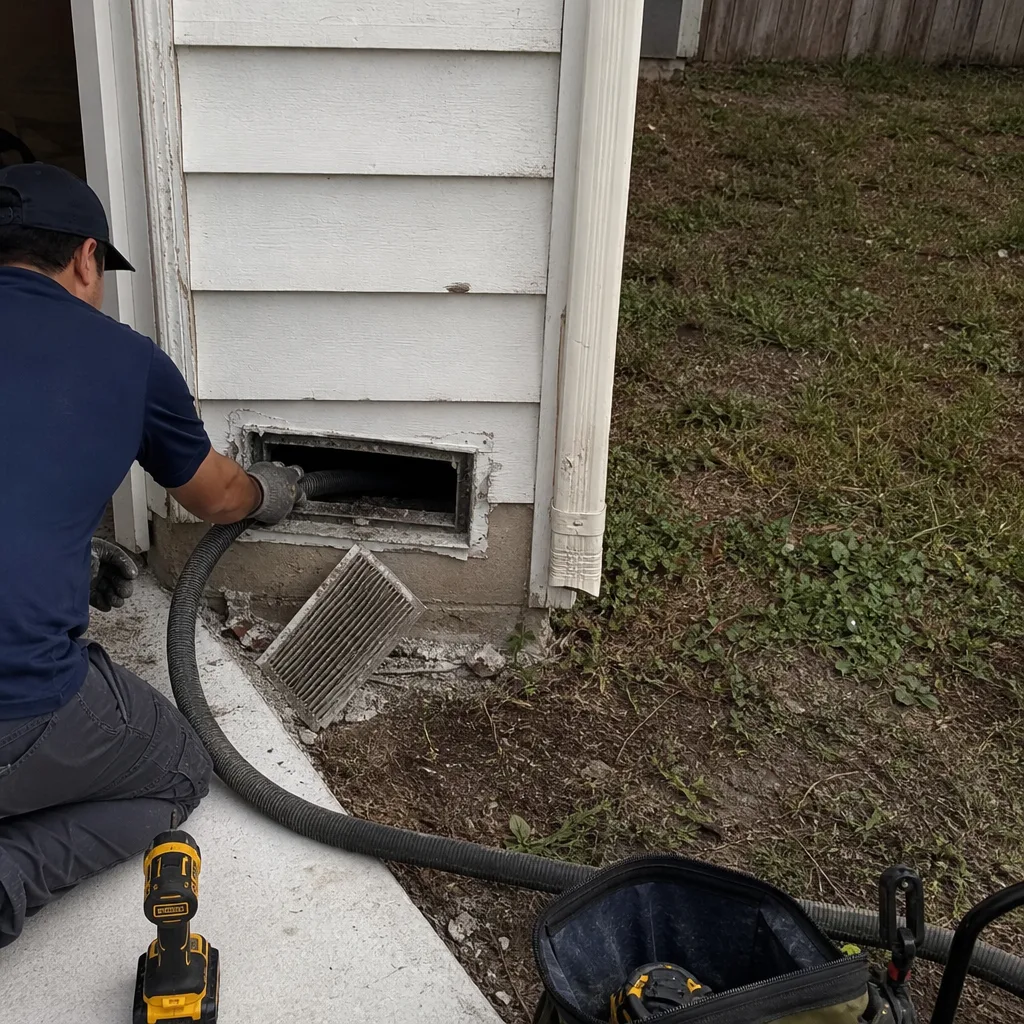 Before
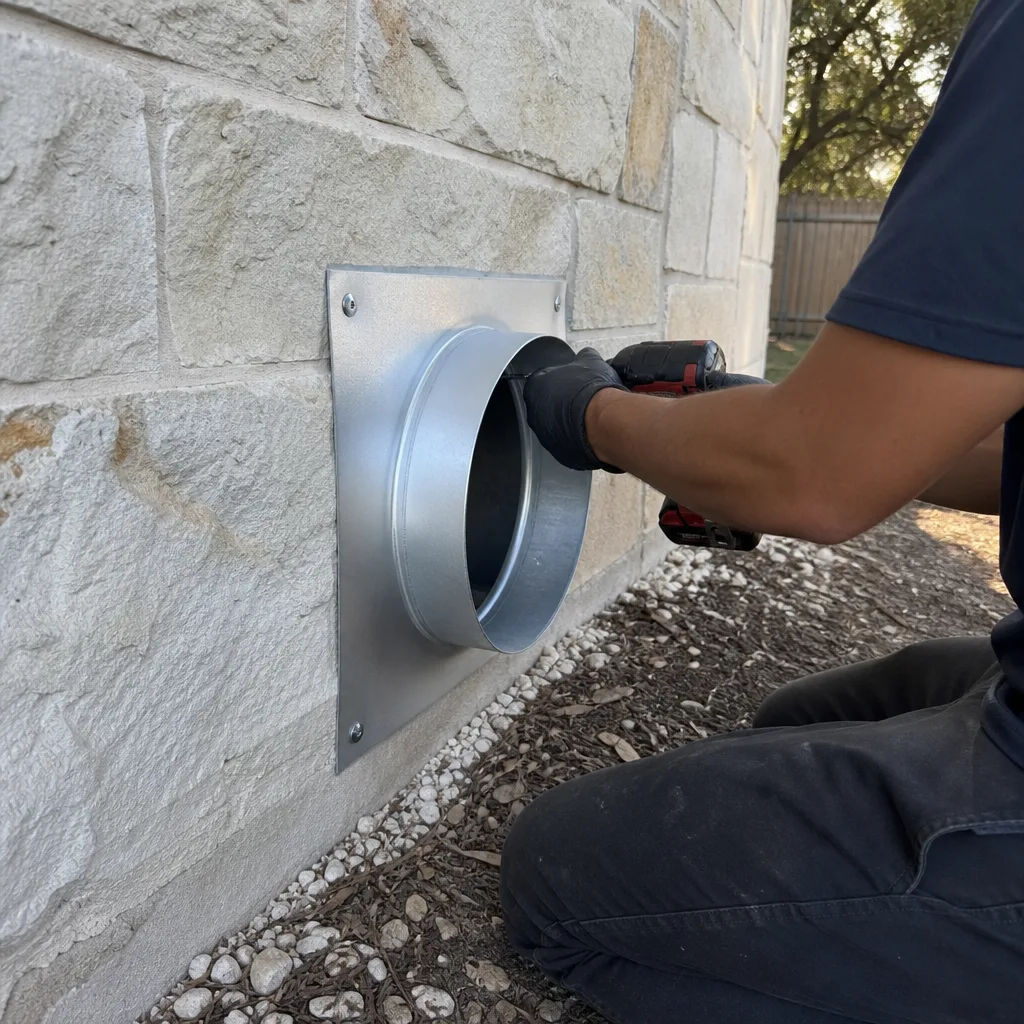 After
After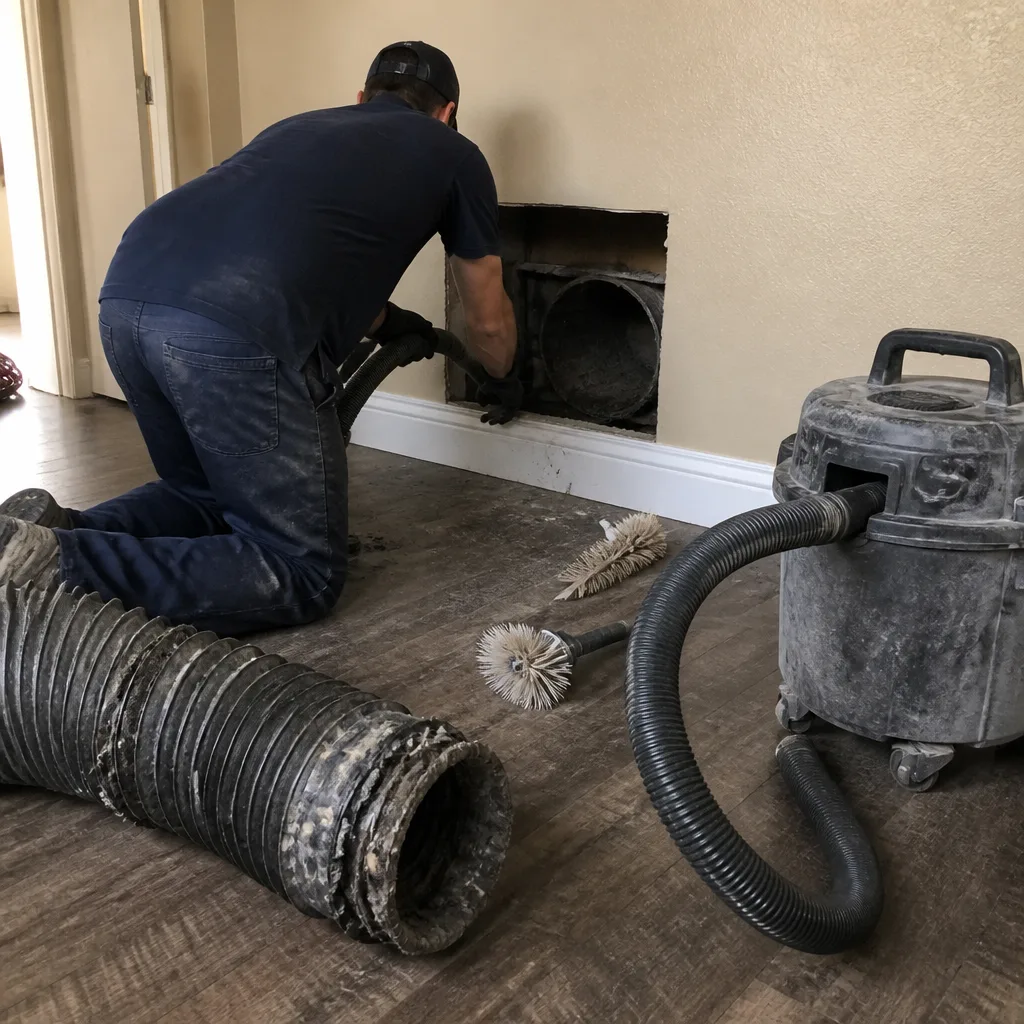 Before
 After
After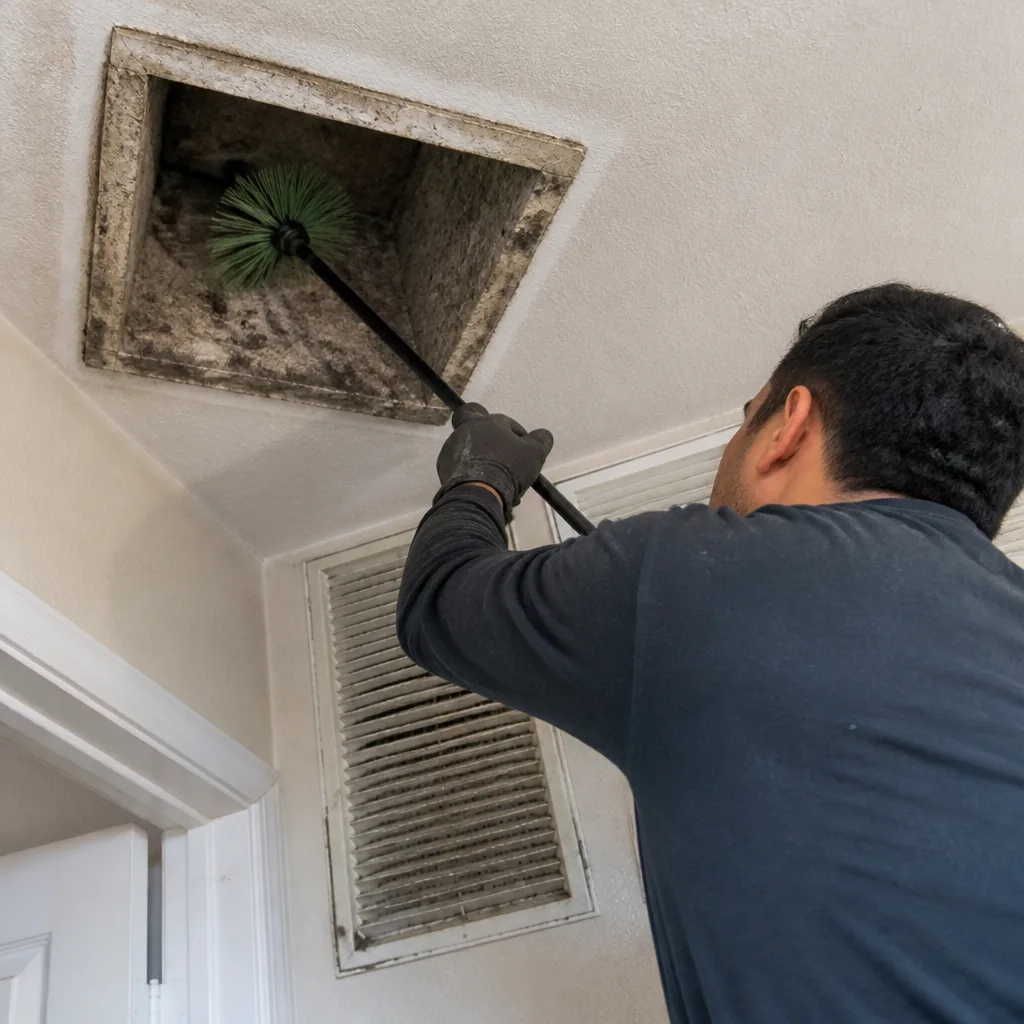 Before
 After
After