
Last updated October 15, 2026
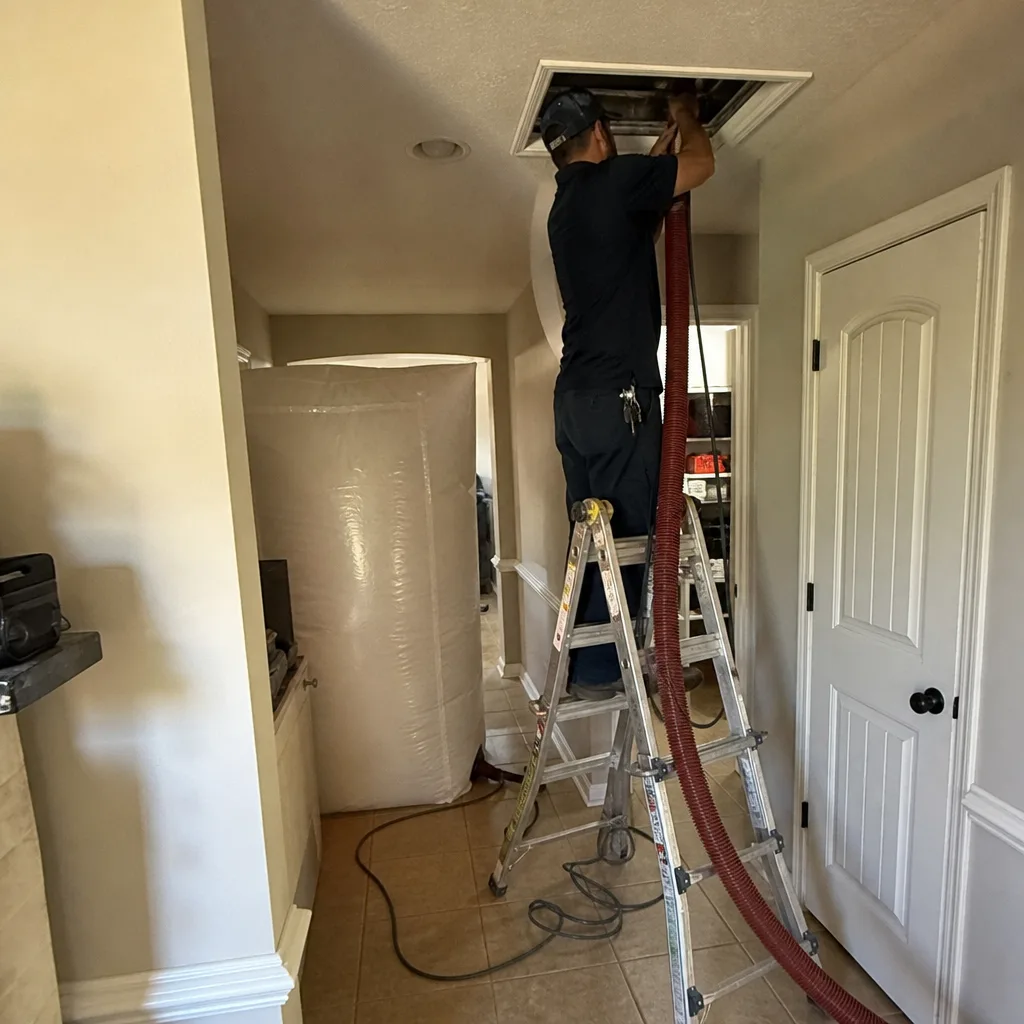
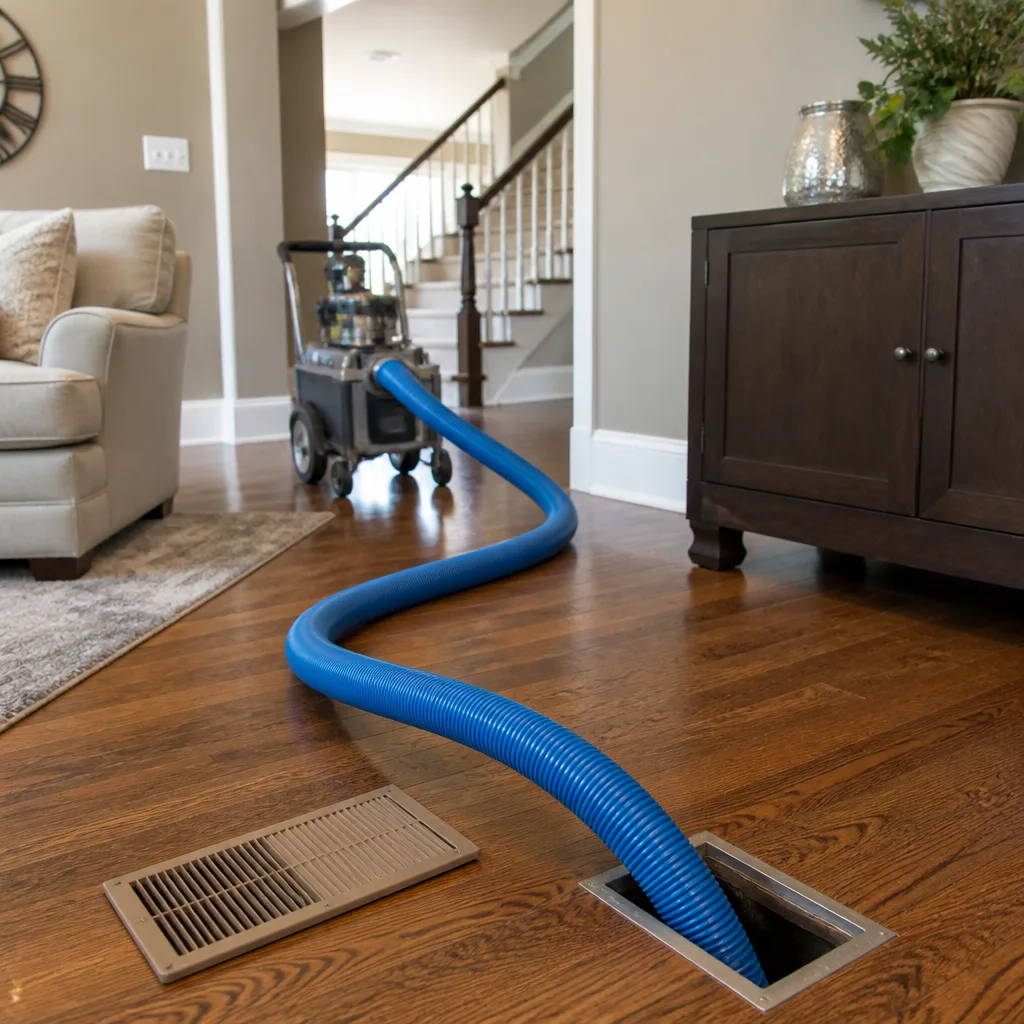 Whole-home duct cleaning
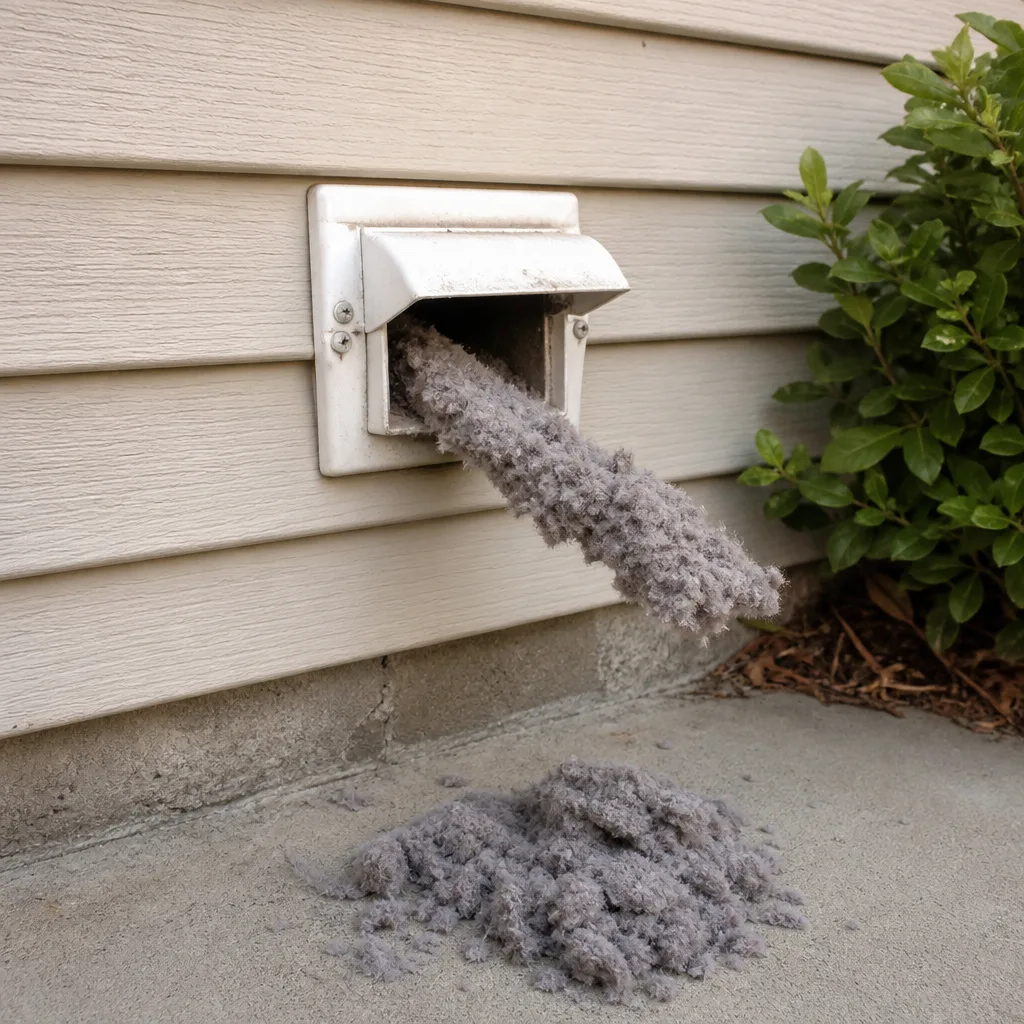 Dryer vent cleaning
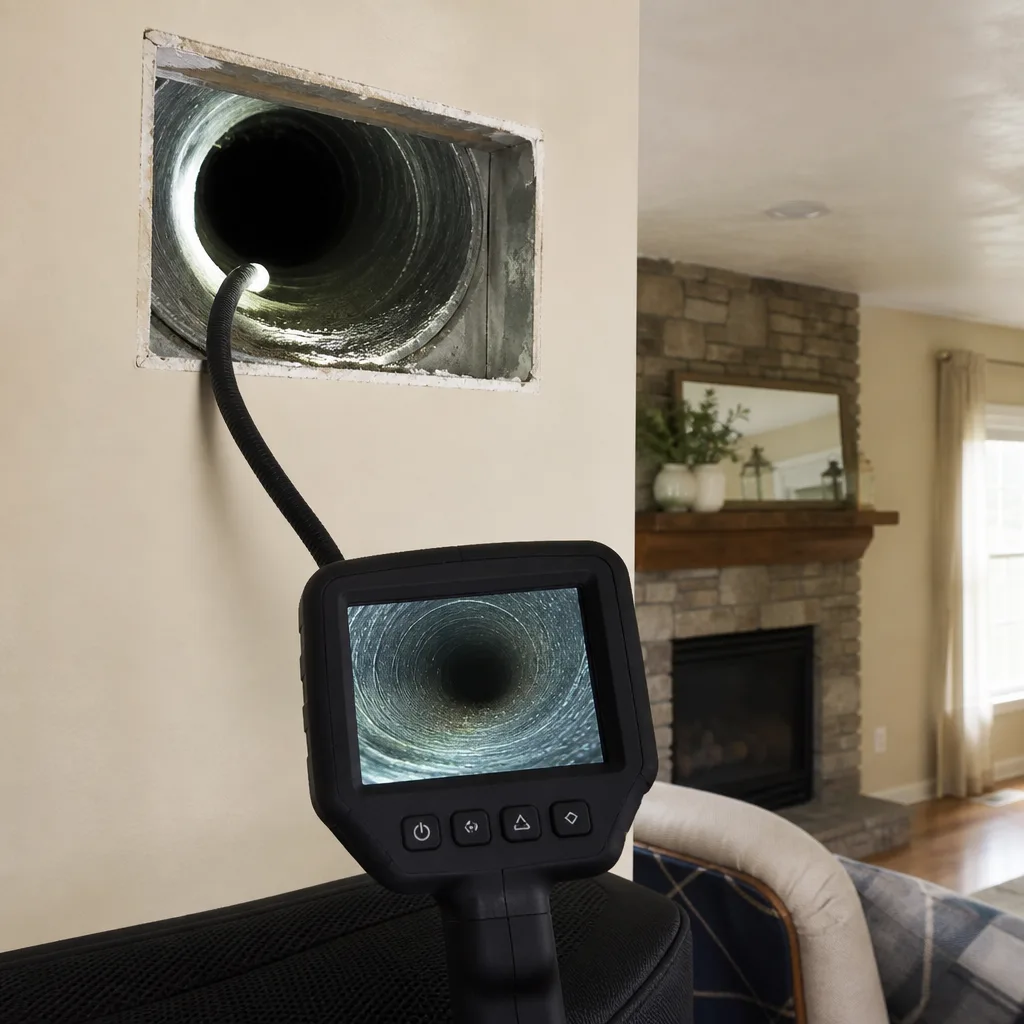 Camera inspection
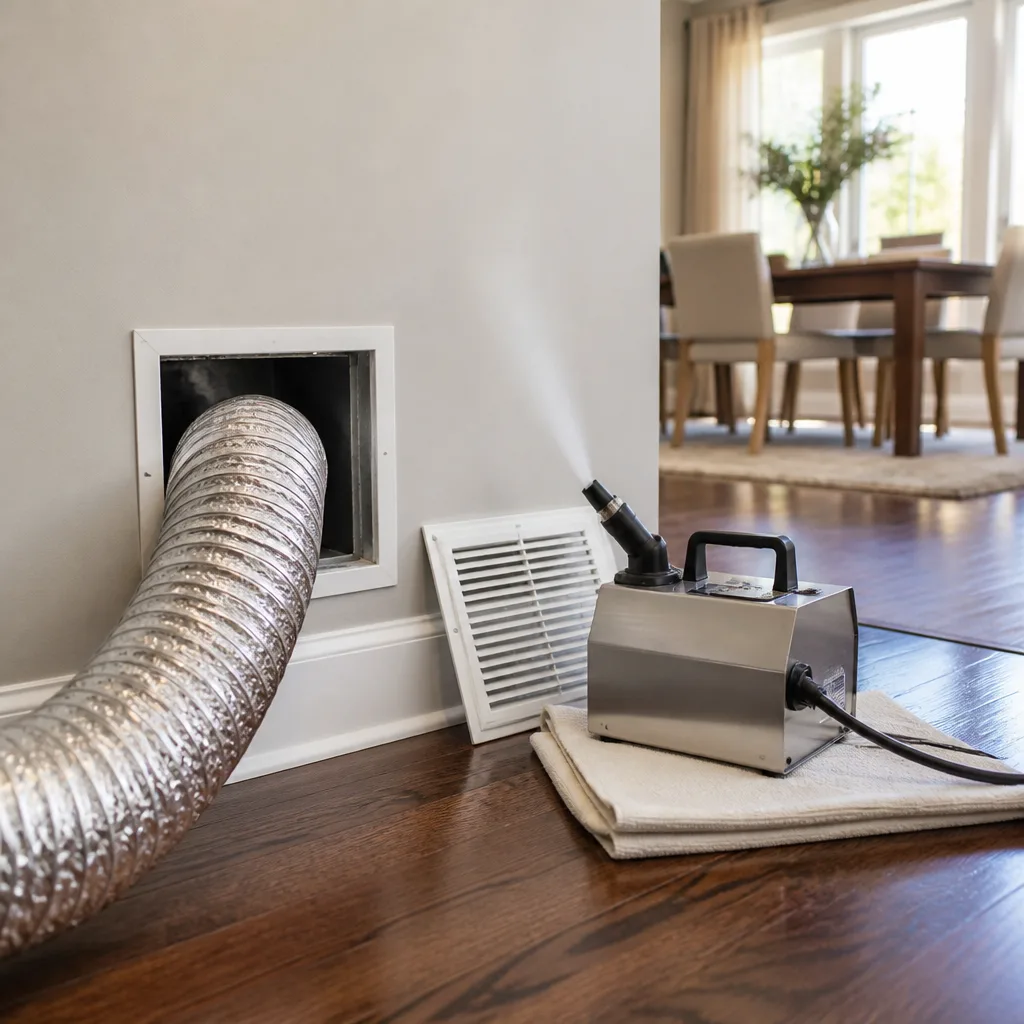 Sanitizing & deodorizing
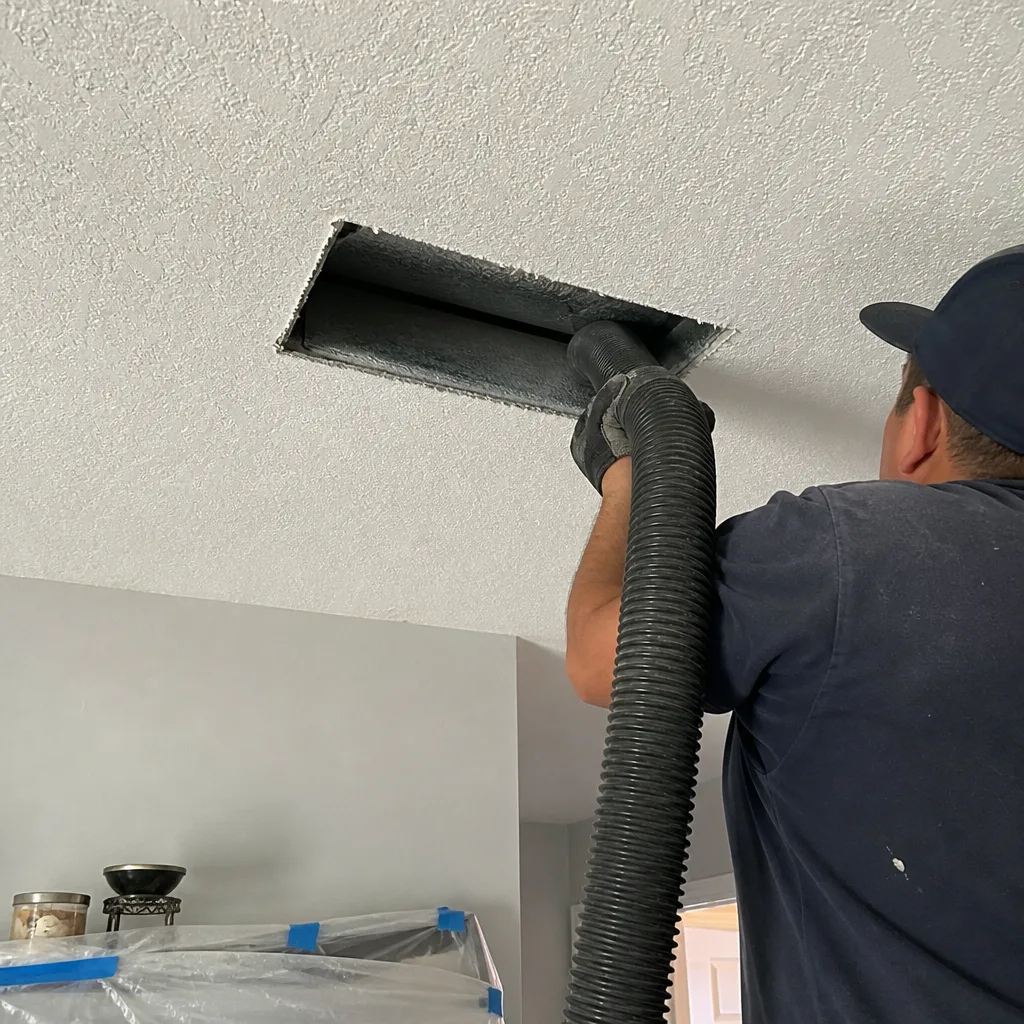
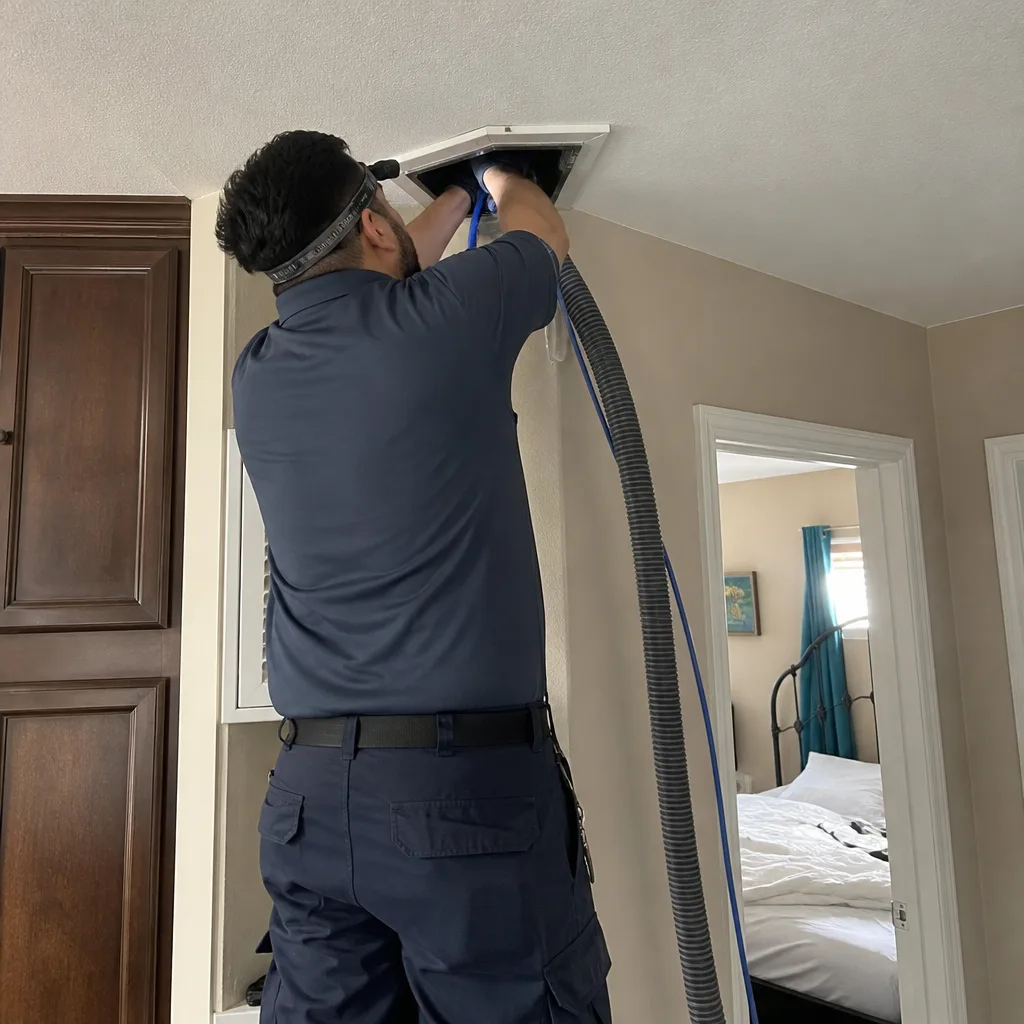
Whole-system duct and dryer vent check with before-and-after photos - you see exactly what came out of your vents
That "$99 whole-house special" is a bait ad - the real number appears once they are in your hallway, or the "clean" is a shop-vac at the register. We photograph the inside of your ducts before and after instead.
DIY vs Professional Air Duct Cleaning: The San Antonio Homeowner’s Decision Guide
The most common DIY air duct cleaning approach – a shop vac, a dryer vent brush kit, and 90 minutes on a Saturday – cleans approximately the first 18 inches of each duct branch. The contamination that actually affects air quality and system efficiency typically begins at the trunk lines and plenum, which require truck-mounted negative pressure equipment to reach without redistributing debris. This guide draws the line honestly: what you can genuinely accomplish yourself, what requires professional Air Duct Cleaning, and why that distinction matters more in San Antonio’s specific climate than it does almost anywhere else in Texas.
Quick Answer
DIY air duct cleaning can remove visible dust from vent registers and the first accessible inches of ductwork, but it cannot reach the trunk lines, plenum, or return air chambers where contamination actually accumulates – and in San Antonio, where attic heat accelerates flex duct deterioration, aggressive DIY methods can damage aging ductwork. Professional cleaning with truck-mounted negative pressure equipment removes contamination at the source without redistributing it through your home. If you’re dealing with post-renovation dust, visible mold, rodent intrusion, or a system older than 5 years, professional service is not optional for meaningful results.
Styles & brands we work with
Table of Contents
- What DIY Can Genuinely Accomplish
- The Equipment Gap: Why Consumer Tools Fall Short
- San Antonio-Specific DIY Risks
- When DIY Is Genuinely Enough
- When Professional Service Is Not Optional
- How to Make the Most of a Professional Cleaning: Prep Work That Saves You Money
- What It Costs: DIY vs. Professional in San Antonio
What DIY Can Genuinely Accomplish
Let’s start with an honest assessment. A thorough DIY effort on a Saturday afternoon can accomplish three things, and none of them are worthless. In our experience cleaning ducts across San Antonio since 2004, we’ve found that homeowners who do targeted maintenance between professional cleanings keep their systems meaningfully cleaner than those who do nothing at all.
First, register cleaning. You can remove every vent cover in your home, wash them with warm water and mild soap, let them dry, and replace them. In San Antonio, where cedar pollen season runs from December through February and the humidity returns by May, this alone removes a visible layer of allergens from the air path.
Second, accessible flex duct sections. In many San Antonio ranch-style homes built between the 1960s and 1990s, short runs of flex duct are reachable from the attic access point. You can visually inspect these sections, carefully vacuum what you can reach, and photograph what you see. The key word is carefully – flex duct from this era is often brittle, and the insulation jacket tears easily.
Third, filter housing and return grilles. You can and should vacuum the return air grille, replace the filter, and clean the immediate filter housing area. A Honeywell or Aprilaire filter housing can trap a surprising amount of visible debris right at the filter slot. This is accessible, safe, and genuinely worthwhile.
Here’s the honest air quality impact: these three tasks address the first 18 to 24 inches of visible ductwork. They do not address the trunk lines, the plenum, the return air chamber, or the branch takeoffs where dust, pollen, and debris actually accumulate over years. If your ducts are relatively clean and you’re doing maintenance, DIY is reasonable. If you’re seeing dust on surfaces within days of cleaning, the problem is upstream where consumer tools cannot reach.
The Equipment Gap: Why Consumer Tools Fall Short
The difference between what you can rent or buy at a hardware store and what a professional air duct cleaning company uses is not a matter of scale. It’s a matter of method. Consumer tools push air into ducts. Professional equipment pulls air out of the system under negative pressure. That distinction is the entire game.
A shop vac, even a high-powered one, operates by suction at the single point where you attach the hose. When you insert that hose into a duct, the negative pressure drops off rapidly with distance. By the time you’re 24 inches from the attachment point, you’re moving almost no meaningful air. Meanwhile, the vacuum’s exhaust – which on many consumer models includes fine particulate the filter doesn’t capture – is blowing into the room, redistributing the very dust you’re trying to remove.
A professional truck-mounted negative pressure system, by contrast, seals the duct system and creates continuous suction throughout the entire network. Professional-grade equipment from brands like Rotobrush and Nikro operates with agitation and extraction happening simultaneously: mechanical brushes dislodge debris from duct walls while the negative pressure immediately removes it from the system. The debris doesn’t get pushed deeper. It doesn’t get redistributed. It exits the system at the point of collection.
This gap matters more in San Antonio for a specific reason: duct runs here are long. The larger ranch-style and two-story homes common in neighborhoods like Alamo Heights, Stone Oak, and Helotes often have branch runs of 30 to 50 feet from the plenum to the furthest vent. Consumer tools simply cannot move air that distance. The trunk lines in these homes – the large rectangular ducts that distribute air from the plenum to each branch – are typically 8 to 14 inches deep and completely inaccessible with consumer equipment.
We use professional-grade equipment from Rotobrush and Nikro precisely because these systems are engineered for negative-pressure extraction across long duct runs. Abatement Technologies equipment offers supplementary air scrubbing that’s valuable in cases where the air quality concern is particulate matter. The equipment gap is real, and it’s the single biggest reason DIY approaches deliver visible but superficial results.
San Antonio-Specific DIY Risks
San Antonio’s climate creates three specific risks for DIY air duct cleaning that homeowners in cooler or less humid regions don’t face. Understanding these risks is what separates a safe, useful Saturday project from an expensive mistake.
Risk 1: Attic heat and aged flex duct. San Antonio attics routinely reach 130 to 150 degrees Fahrenheit in July and August. Flex duct insulation – typically fiberglass with a foil or plastic outer jacket – degrades under sustained heat. In homes built before 2000, this ductwork is often brittle, with a jacket that tears when handled, compressed, or aggressively agitated. A DIY attempt that involves pushing a rotating brush or aggressive vacuum attachment into old flex duct can tear the jacket, creating air leaks that reduce system efficiency and introduce attic air – which in San Antonio means hot, dusty, sometimes fiberglass-laden air – directly into your supply stream. We regularly see spring failures and torn duct jackets in older San Antonio homes that look fine on casual inspection but cannot withstand mechanical agitation.
Risk 2: Cedar pollen redistribution. San Antonio’s cedar pollen season is not a mild annoyance. December through February, mountain cedar from the Hill Country produces some of the highest pollen counts in the United States. If your system has accumulated cedar pollen in the trunk lines – and most older San Antonio systems have – an aggressive DIY approach that agitates those areas without adequate extraction will redistribute that pollen through your living space. What starts as a cleaning project becomes an allergy event.
Risk 3: Rodent debris in trunk sections. San Antonio’s hot, dry climate drives rodents into attics seeking shelter and water. When rodents enter ductwork, the evidence – droppings, nesting material, urine-stained insulation – typically accumulates in trunk sections and the plenum, not in the first accessible inches of branch ducts. Disturbing this material with consumer tools without proper containment and negative pressure extraction releases particulate into the air you breathe. This is not a cleaning issue; it’s a health and safety issue that requires professional-grade containment.
We should also mention warranty implications. Most HVAC manufacturer warranties include language that requires professional installation, service, and maintenance. Improper access to the system – including opening the plenum or disconnecting duct runs to clean them – can void warranty coverage on major components like the evaporator coil, blower motor, or heat exchanger. In San Antonio, where AC systems run nearly year-round and replacement costs routinely exceed $8,000, protecting that warranty matters.
When DIY Is Genuinely Enough
We don’t think every home needs professional air duct cleaning. Part of being a knowledgeable neighbor is saying so plainly. There are specific scenarios where DIY maintenance is genuinely sufficient, and we’d rather tell you that upfront than sell you a service you don’t need.
Here are the scenarios where DIY is the right call:
- Routine register and return grille maintenance. If you’re cleaning vent covers, vacuuming registers, and replacing filters every 1 to 3 months, this is appropriate DIY work. It should be ongoing, and it makes a meaningful difference in visible dust.
- Newer home with a sealed, well-maintained system. Homes built in the last 5 to 7 years in developments around Cibolo, Schertz, or far west San Antonio often have well-sealed duct systems that haven’t had time to accumulate significant contamination. If you’ve lived there since construction, ran the system with good filtration, and haven’t done major renovation work, DIY maintenance is likely sufficient.
- Single visible source of debris. If you had a specific event – a drywall patch in one room, a dust storm that blew debris through an open window near a single register – you may be able to address that localized issue yourself. Clean the affected register, vacuum the accessible duct section, and monitor.
- Filter housing hygiene. Keeping the filter housing, filter slot, and return grille clean is genuinely useful DIY work. A Honeywell media filter housing, for example, collects dust at the filter edge that’s easy to remove with a vacuum and damp cloth.
For these scenarios, a careful homeowner can do real maintenance work without professional equipment. The key word is careful: gentle handling of any duct material, no aggressive insertion or agitation, and no attempt to reach beyond what you can directly see and access.
When Professional Service Is Not Optional
Some situations require professional equipment and technique, not because DIY is difficult but because DIY cannot address the actual problem. In these scenarios, attempting to do the work yourself will cost you time, potentially damage your system, and leave the underlying problem untouched.
Post-renovation dust. If you’ve had drywall work, flooring replacement, or major remodeling done – common in older Alamo Heights, Olmos Park, and Monte Vista homes undergoing renovation – construction dust has entered the duct system during the work. This fine particulate settles in trunk lines and the plenum. It requires negative-pressure extraction to remove thoroughly. A shop vac cannot move enough air to pull this dust from the entire system.
Visible mold or persistent musty odor. San Antonio’s humidity creates conditions where mold can establish in duct systems, particularly in the return air chamber and evaporator coil area. Visible mold requires professional assessment. The remediation often involves not just cleaning but identifying the moisture source – a clogged condensate drain, an oversized AC unit short-cycling, or a duct leak pulling humid attic air into the system. This is not a job for a brush kit and a vacuum.
Verified rodent intrusion. If you’ve seen rodents in the attic, heard them in ductwork, or found droppings in visible duct sections, professional cleaning with proper containment is required. The health risks of disturbing rodent debris without adequate containment and extraction are not worth the money you’d save.
System older than 5 years with no professional cleaning history. The average San Antonio home has ductwork that hasn’t been professionally cleaned since installation. If your system is older than 5 years, has multiple occupants with allergies or asthma, or you’re noticing visible dust accumulation on surfaces within days of cleaning, the contamination is beyond the reach of consumer tools. Seasonal Air Duct Cleaning Care for San Antonio: Year-Round Homeowner’s Guide explains why this is scheduled maintenance, not an emergency call – but it does require equipment that can actually do the job.
Airflow problems you can’t diagnose. If some rooms are consistently warmer than others and you’ve ruled out obvious causes like clogged filters or closed dampers, the problem may be deep in the system – crushed duct runs, disconnected branch lines, or a plenum full of debris. Diagnosing these issues requires professional inspection of the full duct network. Air duct repair in San Antonio homes with aging flex duct is common, and the repair conversation often starts with a cleaning that reveals the damage.
How to Make the Most of a Professional Cleaning: Prep Work That Saves You Money
One under-discussed advantage of choosing professional air duct cleaning is that you can reduce the total cost by doing preparation work yourself. Here are the specific steps that save technician time and therefore money, while ensuring the professional’s time is spent on what only professional equipment can do.
Step 1: Clear access to every vent and return. Move furniture away from vent registers. Clear the area around the attic access point – in many San Antonio homes this is in a hallway ceiling or garage ceiling. Remove anything stored near the furnace or air handler. This may sound obvious, but we’ve seen technicians spend 30 to 45 minutes just making access in homes that weren’t prepared.
Step 2: Photograph register conditions before the cleaning. Take clear photos of each vent cover before removal, and of the visible duct section behind each register. Note visible dust accumulation, discoloration, or damage. This gives you a baseline to compare against the post-cleaning condition. If you’ve scheduled a professional cleaning with before-and-after photos included – and we recommend you insist on them – having your own baseline photos strengthens your ability to verify the work was actually done.
Step 3: Note which rooms have the worst airflow. Spend a week paying attention to which rooms feel stuffier, warmer, or dustier than others. Note any rooms where you hear unusual noise from the system – rattling, whistling, or a change in airflow when the system kicks on. This information helps the technician target the inspection. In our experience, homeowners who can say “the back bedroom on the southwest corner is always 5 degrees warmer” give us information that saves inspection time and catches problems early.
Step 4: Write down your questions. Specific questions about filter type, thermostat settings, airflow patterns, and visible concerns help make the technician’s visit more productive. If you have a specific concern – allergies worsening at night, dust accumulating on particular surfaces, a musty smell when the system first kicks on – write it down and share it at the start of the visit.
Step 5: Plan for the visit. Professional air duct cleaning on a typical San Antonio home takes 3 to 5 hours depending on system size and accessibility. Plan for the system to be off during the work. If you have pets, contain them before the technician arrives. If you’re home alone – and many of our San Antonio customers, particularly older homeowners and parents with young children, tell us this is a concern – our How to Hire a Air Duct Cleaning Contractor in San Antonio: A Step-by-Step Guide covers what to verify before you open your door. Every Linden Air Duct San Antonio technician is background-checked, identity-verified, and arrives in a clean, marked uniform. The tech’s name and photo arrive to you before the visit, and a photo ID badge is shown at the door. Every time. We call this the Threshold Standard, and it’s been our operating procedure since 2004.
What It Costs: DIY vs. Professional in San Antonio
Let’s talk about actual dollars. In San Antonio, professional air duct cleaning for a typical single-family home ranges from $350 to $650 depending on system size, number of returns, and accessibility. Larger homes with multiple systems or long duct runs – common in Stone Oak, The Dominion, and other larger San Antonio neighborhoods – can run $650 to $1,000. Homes with severe contamination, rodent debris, or mold remediation requirements fall outside standard pricing and require assessment first.
Here’s the cost comparison by approach:
| Approach | Equipment Cost | Time Required | What You Get |
|---|---|---|---|
| DIY – basic register cleaning | $0 to $50 | 1-2 hours | Clean visible vent covers and first inches of ducts; ongoing maintenance value |
| DIY – shop vac + brush kit | $50 to $180 | 3-6 hours | Cleans accessible duct sections only; risk of redistributing debris or damaging flex duct |
| DIY – rental equipment | $50 to $150 per day | 4-8 hours | Better than shop vac, but still not negative-pressure extraction; rental equipment typically consumer-grade |
| Professional – whole-system cleaning | $350 to $650 typical | 3-5 hours (you do nothing) | Negative-pressure extraction of entire system, including trunk lines, plenum, return chambers, and all branch runs |
The honest truth is that professional cleaning costs more than DIY because professional equipment and technique accomplish something different. The comparison isn’t “expensive professional vs. free DIY” – it’s “complete system cleaning vs. superficial register cleaning.” If your system genuinely needs cleaning, DIY can’t do it. If your system is already clean, DIY maintenance is all you need and you should save your money.
One more important note on pricing: in San Antonio, the air duct cleaning industry has a bait-and-switch reputation. A low coupon price that becomes a far larger invoice once the technician is at your home is a persistent problem in this market. Linden Air Duct San Antonio puts the price in writing before any work begins – always, no exceptions. You’ll know exactly what the job costs before we start. No per-vent pricing games, no surprise add-ons, no pressure at the door.
How Much Does Professional Air Duct Cleaning Cost in San Antonio?
Professional air duct cleaning in San Antonio typically costs between $350 and $650 for a standard single-family home with one HVAC system. Larger homes with multiple systems or extended duct runs can range from $650 to $1,000. Homes with severe contamination, rodent intrusion, or mold-related concerns require an assessment before pricing can be set. Every Linden Air Duct San Antonio quote is put in writing before work begins, so the price you’re quoted is the price you pay.
Why Are Some Quotes So Much Cheaper?
Cheaper quotes in the San Antonio air duct cleaning market are usually cheaper for one of three reasons: the company uses portable consumer-grade equipment instead of truck-mounted negative-pressure systems, the quote doesn’t include the full system (often it’s a bait price that balloons once the technician arrives), or the company doesn’t carry proper insurance and verification for its technicians. A quote under $200 for whole-system cleaning is almost certainly not whole-system cleaning. The equipment required for genuine negative-pressure extraction costs money to purchase, maintain, and operate, and the verified-technician standard that lets you feel safe opening your door also costs money. When a price seems too good, the savings are coming from somewhere – usually from the scope of work or from who shows up at your door.
How Do I Know the Work Was Actually Done?
This is the most important question you can ask any duct cleaning company, and the answer should not be “trust us.” Before-and-after photos are the standard. A professional cleaning should include photographic documentation of the duct interior before and after cleaning – you should be able to see the difference in the trunk lines, plenum, and branch runs. At Linden Air Duct San Antonio, we document every job with before-and-after photos of the ducts themselves, not just the vent covers. You should also receive a written summary of what was found and what was done, including the condition of the duct system and any issues discovered during cleaning. If a company won’t provide this documentation, find a different company.
How Often Does Air Duct Cleaning Really Need Doing?
For most San Antonio homes, professional air duct cleaning every 3 to 5 years is sufficient. Homes with allergy sufferers, multiple pets, or recent renovation work may benefit from more frequent cleaning – every 2 to 3 years. Homes with high-efficiency filtration (like a Honeywell or Aprilaire media filter system) and diligent filter changes may extend the interval to 5 to 7 years. The honest answer is that “every year” is almost never necessary, and any company recommending annual whole-system cleaning as standard practice is selling you something you don’t need. For more guides & resources on maintenance timing, see our blog. The right interval depends on your home’s specific conditions: filter quality, pet load, renovation history, and whether you have cedar pollen problems during San Antonio’s winter allergy season.
See the difference
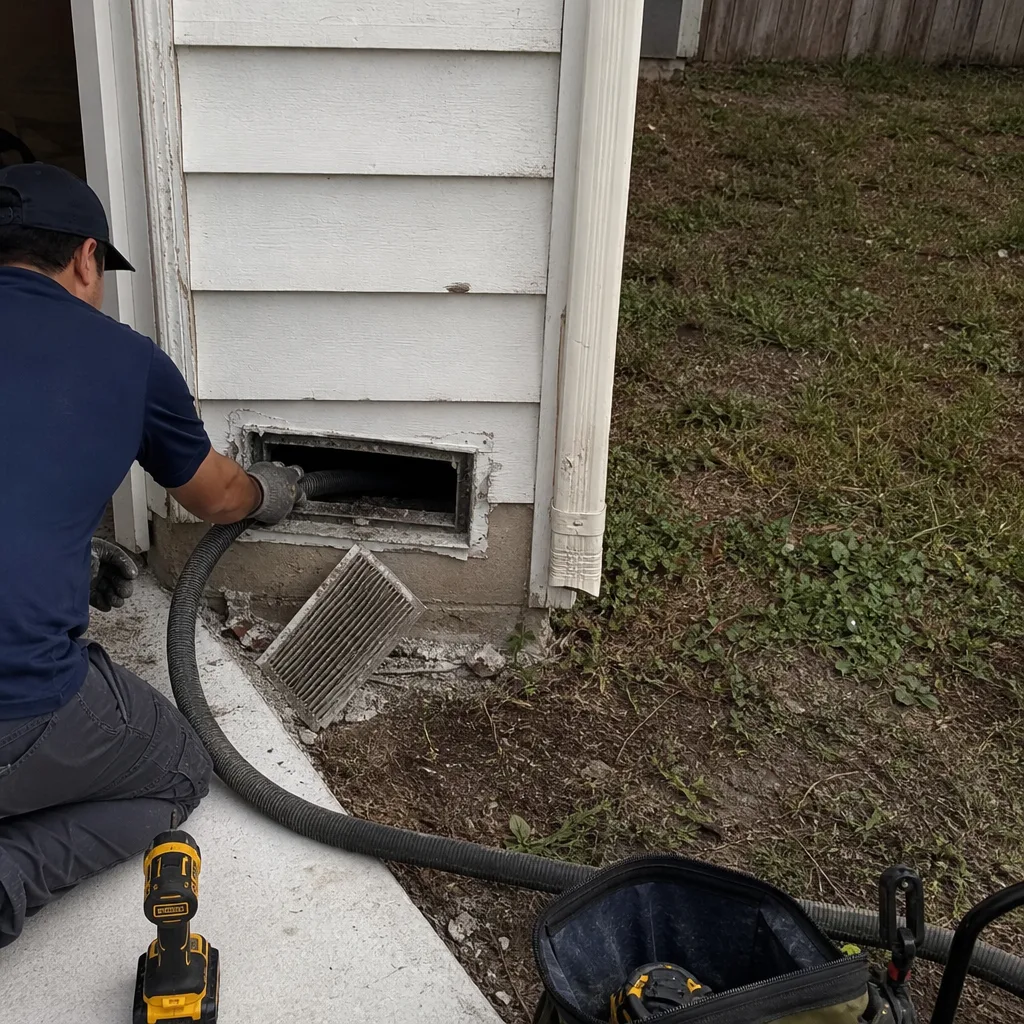 Before
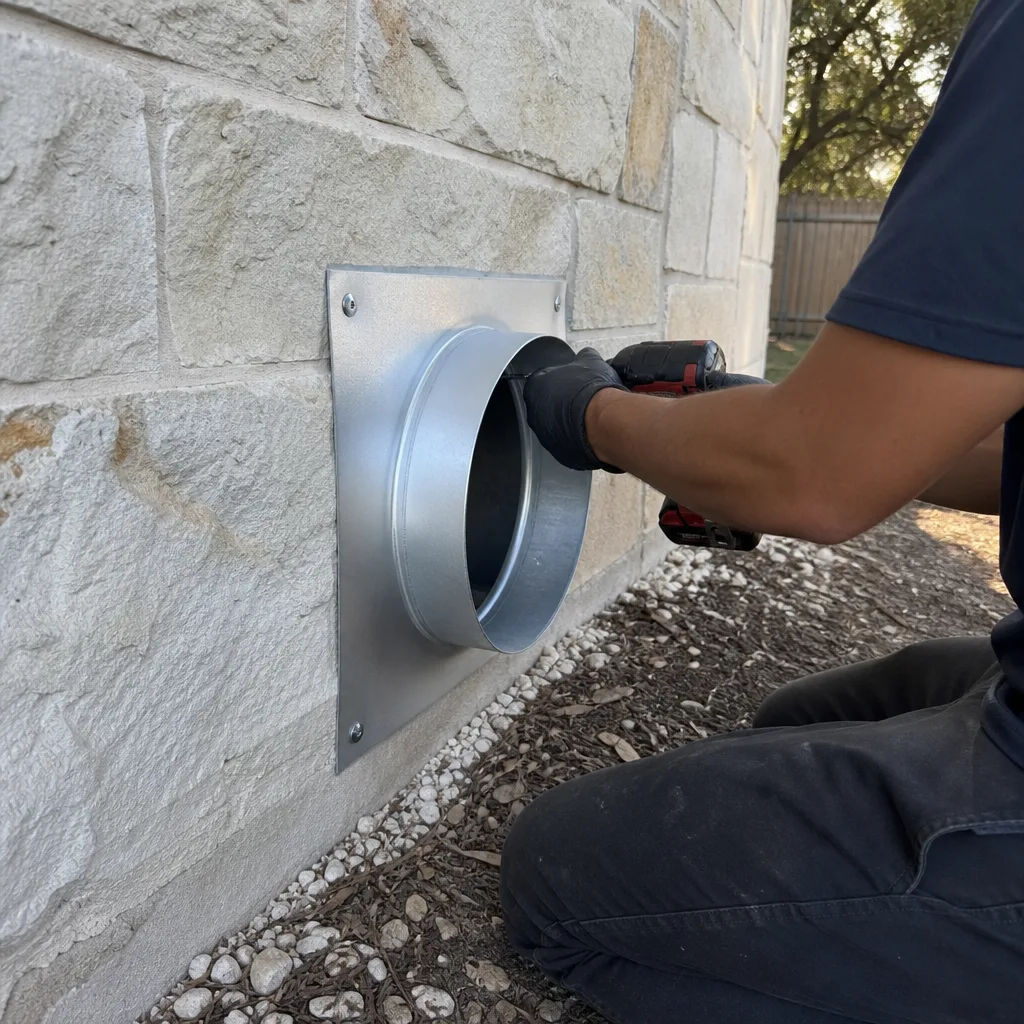 After
After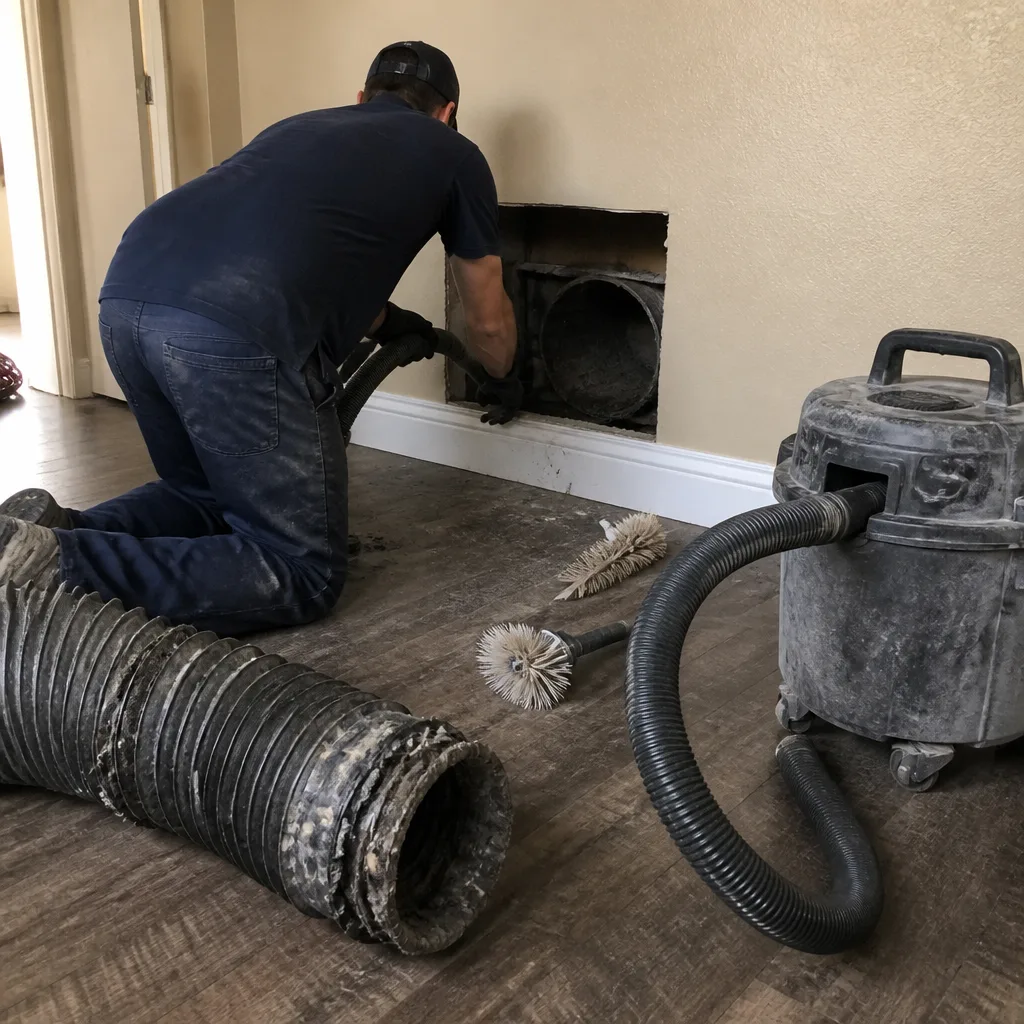 Before
 After
After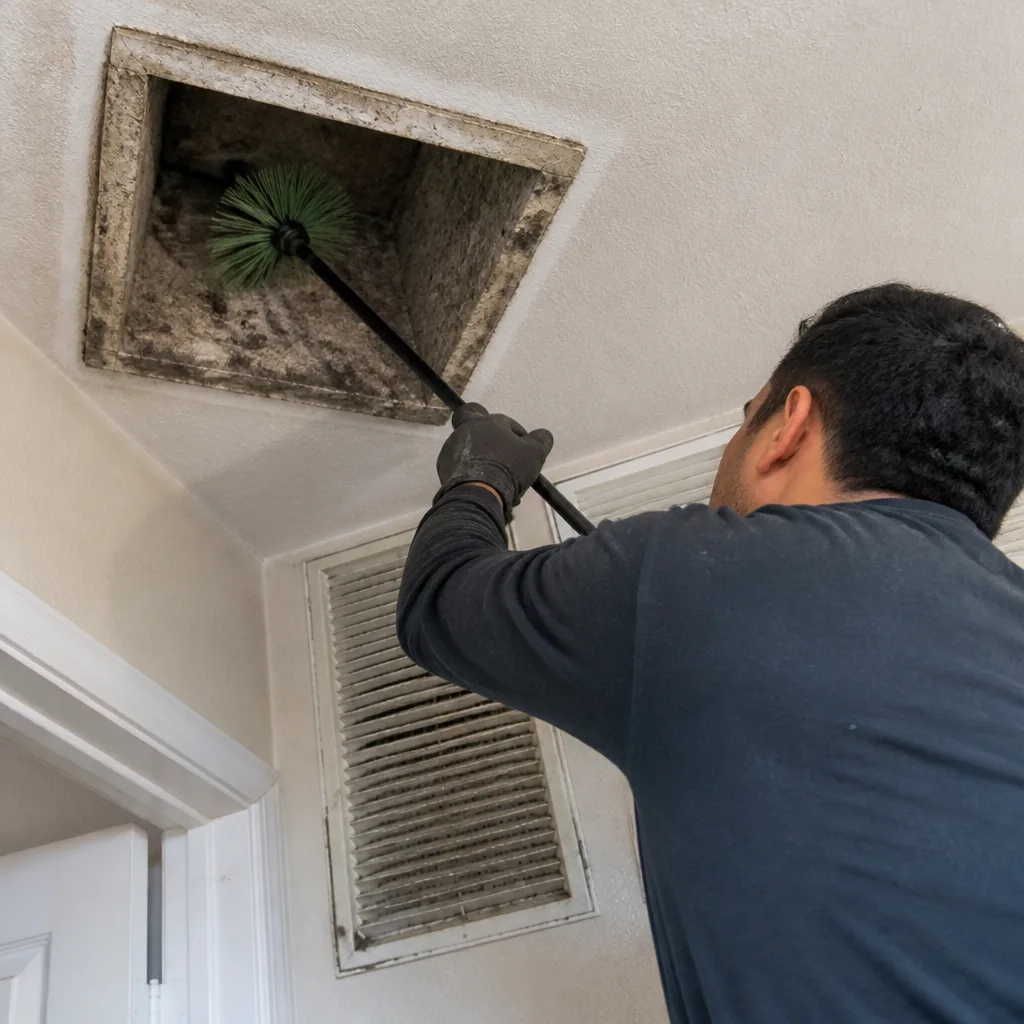 Before
 After
AfterIs DIY Duct Cleaning Ever Worth It?
DIY duct cleaning is worth it for ongoing maintenance – register cleaning, return grille cleaning, and filter housing hygiene. It is not worth it for whole-system cleaning, because the equipment you can buy or rent cannot reach the areas where contamination actually accumulates. If you’ve verified your system is relatively clean, DIY maintenance between professional cleanings keeps things that way longer. If your system hasn’t been professionally cleaned in 5+ years, has visible contamination, or has airflow problems you can’t explain, DIY time and money is better spent on a professional cleaning that addresses the actual problem.
Can I Clean My Own Dryer Vent?
Dryer vent cleaning sits in a different category than air duct cleaning. The distance from your dryer to the exterior vent is typically short – 10 to 25 feet in most San Antonio homes – and a consumer dryer vent brush kit can genuinely clear lint from an accessible, straight vent run. However, if your vent run is long, has multiple bends, exits through the roof (common in many San Antonio homes), or hasn’t been cleaned in years, the job requires professional equipment. A clogged dryer vent is a fire hazard – lint is highly combustible, and a blocked vent can overheat and ignite. If your dryer takes longer than normal to dry clothes, or the exterior vent flap isn’t opening, this is a job where professional Dryer Vent Cleaning in San Antonio is worth the call.
Common Mistakes to Avoid
- Using a leaf blower to clean ducts. A leaf blower pushes air into the duct system, which forces dust and debris deeper into the trunk lines and plenum. It does not extract anything; it relocates contamination and can separate flex duct connections in San Antonio homes with brittle, heat-aged ductwork.
- Inserting a rotating brush into old flex duct. Flex duct from the 1970s through 1990s – common in many San Antonio ranch-style homes – has insulation jackets that tear easily. A rotating brush can tear the jacket, creating air leaks and introducing attic air into the system.
- Believing a low coupon price for whole-system cleaning. If the price seems too good for a genuine negative-pressure whole-system cleaning, it is. The San Antonio market has a documented problem with bait-and-switch pricing where the invoice grows dramatically once the technician is at the door.
- Skipping before-and-after documentation. Without photographic evidence of the duct interior before and after cleaning, you have no way to verify the work was done. Any professional company should provide this documentation without being asked.
- Cleaning ducts with a shop vac without sealing the system. A shop vac’s exhaust blows fine particulate into your living space while you work. The dust you’re trying to remove is partially redistributed into the room. If you’re going to vacuum ducts with a shop vac, seal the exhaust and use the best HEPA filter your vac will accept.
- Attempting DIY after rodent intrusion. Rodent droppings and nesting material require professional containment and removal. Disturbing this material with consumer tools releases harmful particulate into the air you and your family breathe. This is a health issue, not a cleaning issue.
When to Call a Professional
Call a professional when the problem is beyond the reach of your tools or beyond the scope of safe DIY work. That means post-renovation dust throughout the system, visible mold or persistent musty odors, verified rodent intrusion, a system older than 5 years with no professional cleaning history, or airflow problems you can’t diagnose. It also means any time you’re unsure – because a professional assessment costs you nothing. Linden Air Duct San Antonio offers free estimates in San Antonio – call (430) 233-7681 and speak to a live person who can answer your specific questions, 24 hours a day, every day of the week.
Frequently Asked Questions
Cleaning air ducts yourself is worth it for register-level maintenance: removing and washing vent covers, vacuuming the return grille, and keeping the filter housing clean. This work removes visible surface dust and keeps your system cleaner between professional cleanings. It is not worth it as a substitute for professional cleaning when the system has accumulated contamination in the trunk lines or plenum – consumer tools simply cannot reach those areas effectively.
You can clean the visible portions of your air duct system – vent registers, return grilles, and the first few inches of accessible duct runs – without special equipment. You cannot clean the trunk lines, plenum, return air chamber, or most branch runs without professional negative-pressure equipment. In San Antonio homes with long duct runs and aged flex duct, attempting to reach deeper with consumer tools risks damaging the ductwork and redistributing contamination rather than removing it.
In San Antonio, unmaintained duct systems accumulate dust, pollen (including significant cedar pollen from the Hill Country), pet dander, and in some cases rodent debris. Over time, this accumulation restricts airflow, forces your AC system to work harder, and circulates particulate through your living space. Ductwork in San Antonio’s hot attics also deteriorates over time, and a cleaning is often the moment when deteriorating flex duct and failed connections are discovered before they become expensive repairs.
Reputable air duct cleaning companies clean the entire system: all supply and return duct runs, the trunk lines, the plenum, the return air chamber, and the blower and evaporator coil area where accessible. They use truck-mounted negative-pressure equipment that seals the system and extracts debris at the point of collection. Before-and-after photos of the duct interior should be standard documentation. Companies that don’t provide this level of access and documentation are not cleaning the whole system.
Choose based on who is actually coming to your door and what they’ll document in writing. A local San Antonio company with verified technicians – background-checked, identity-verified, and introduced to you by name and photo before arrival – gives you specific accountability that a national chain scheduling unknown subcontractors cannot. The Threshold Standard at Linden Air Duct San Antonio means every technician is background-checked, photo-badged, and identified to you before the visit. That standard, plus a written price before work begins, matters more than whether the name on the van says “local” or “national.”
Ask four questions before scheduling: Can you give me the price in writing before work begins? Will you provide before-and-after photos of the duct interior? What equipment do you use, and does it create negative pressure throughout the whole system? And who specifically is coming to my door – can you send their name and photo in advance? A company that can answer all four clearly – and Linden Air Duct San Antonio answers them with a live person 24/7 at (430) 233-7681 – is worth your time. A company that hedges on any of them is not.
The Bottom Line
The DIY versus professional air duct cleaning decision comes down to what you’re actually trying to accomplish. If you want to maintain a clean system, clean your registers, returns, and filter housing regularly – that’s genuine maintenance and it matters. If your system is contaminated – with renovation dust, years of accumulated pollen and debris, or something worse – no amount of DIY effort addresses the actual problem, and aggressive attempts can damage aging San Antonio ductwork or redistribute contamination through your home. Professional cleaning costs more because professional equipment reaches where contamination actually accumulates. The smart homeowner does the maintenance themselves and calls a verified, documented professional when the problem is beyond the reach of a Saturday afternoon.
Ready to know exactly what your air duct system needs? Call Linden Air Duct San Antonio at (430) 233-7681 for a free estimate. A live person answers, every time. You’ll get an honest assessment, a written price before any work begins, and the name and photo of your technician before they arrive at your door.
Written by Marcus Veale, Owner at Linden Air Duct San Antonio, serving San Antonio since 2004.