
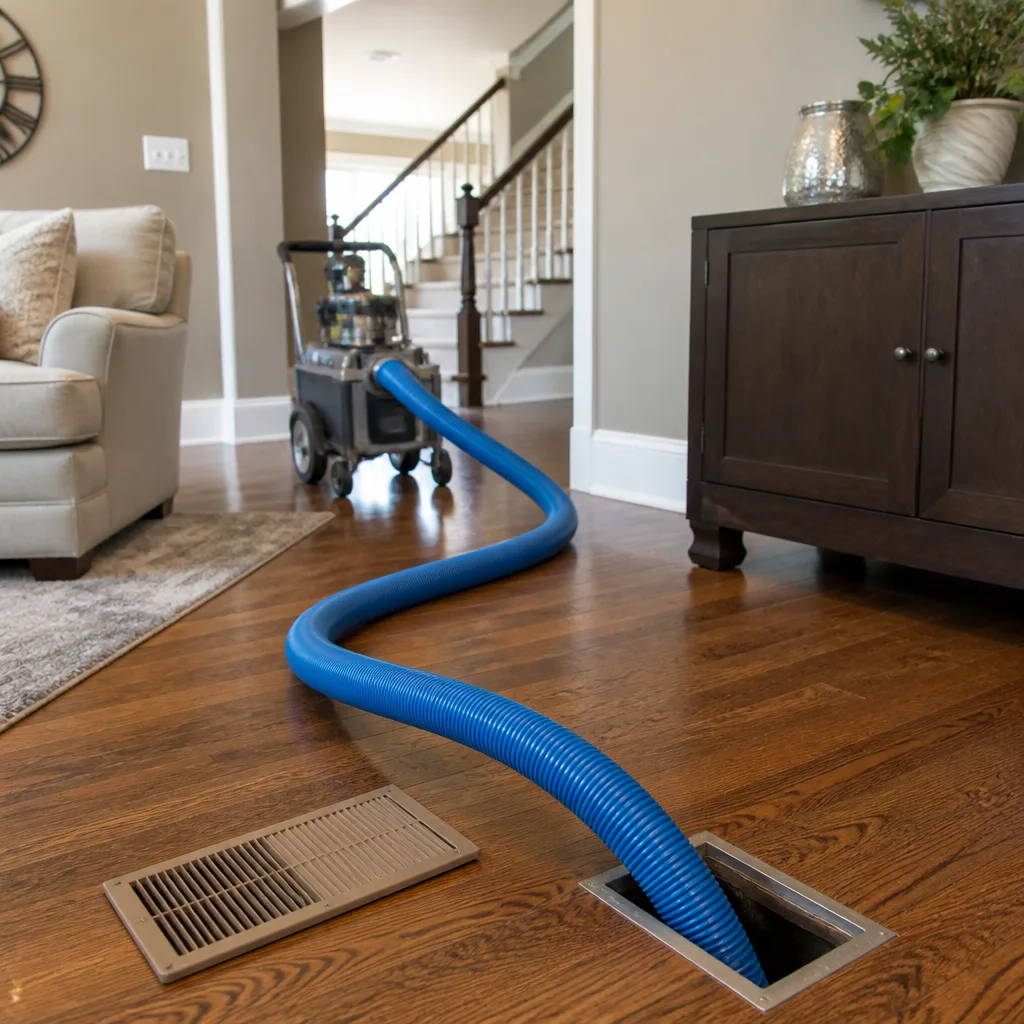
 Whole-home duct cleaning
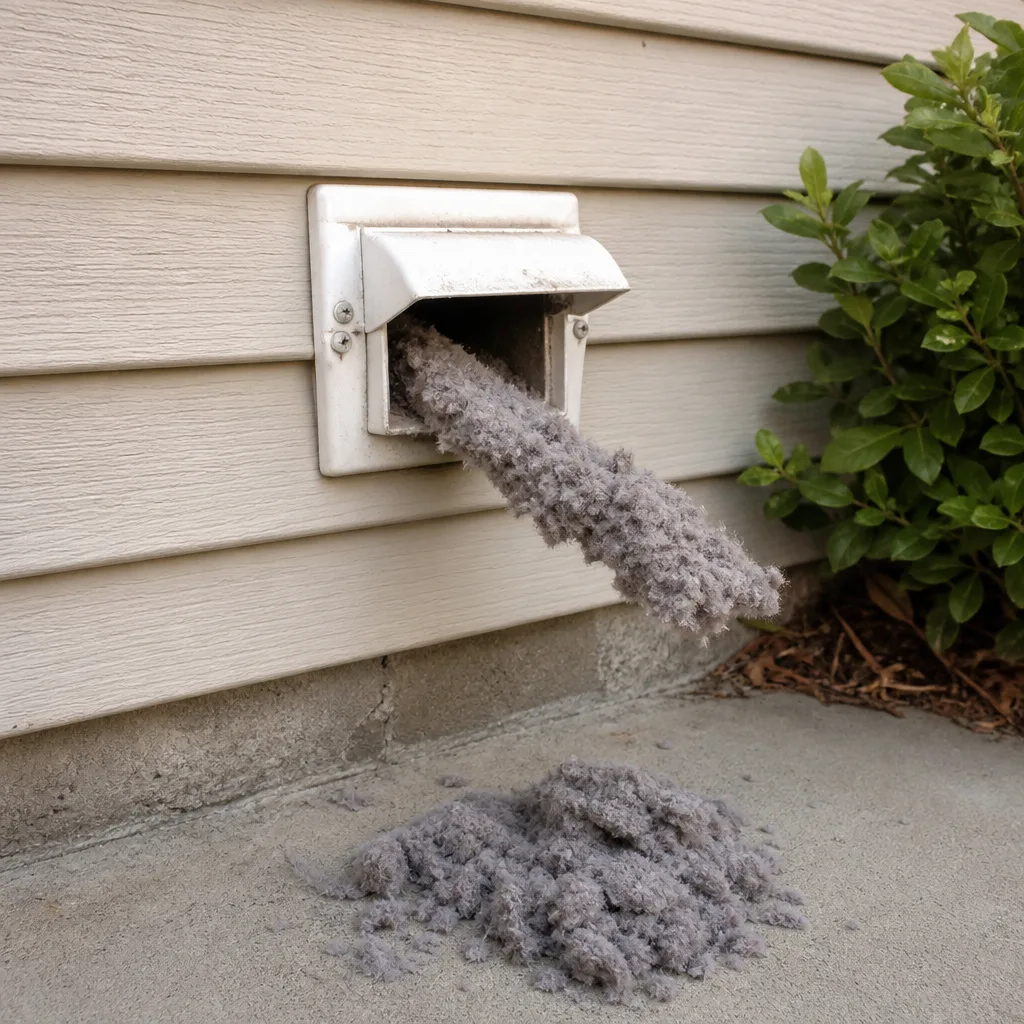 Dryer vent cleaning
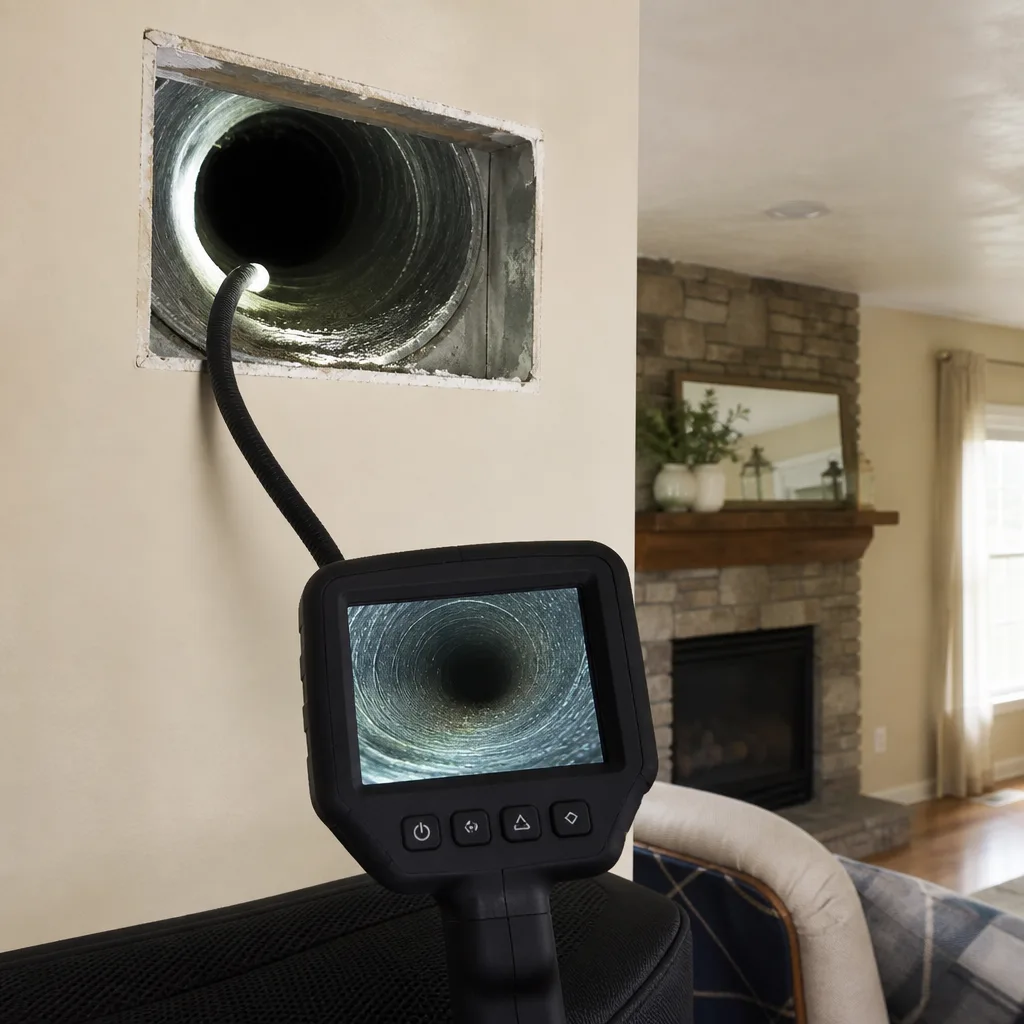 Camera inspection
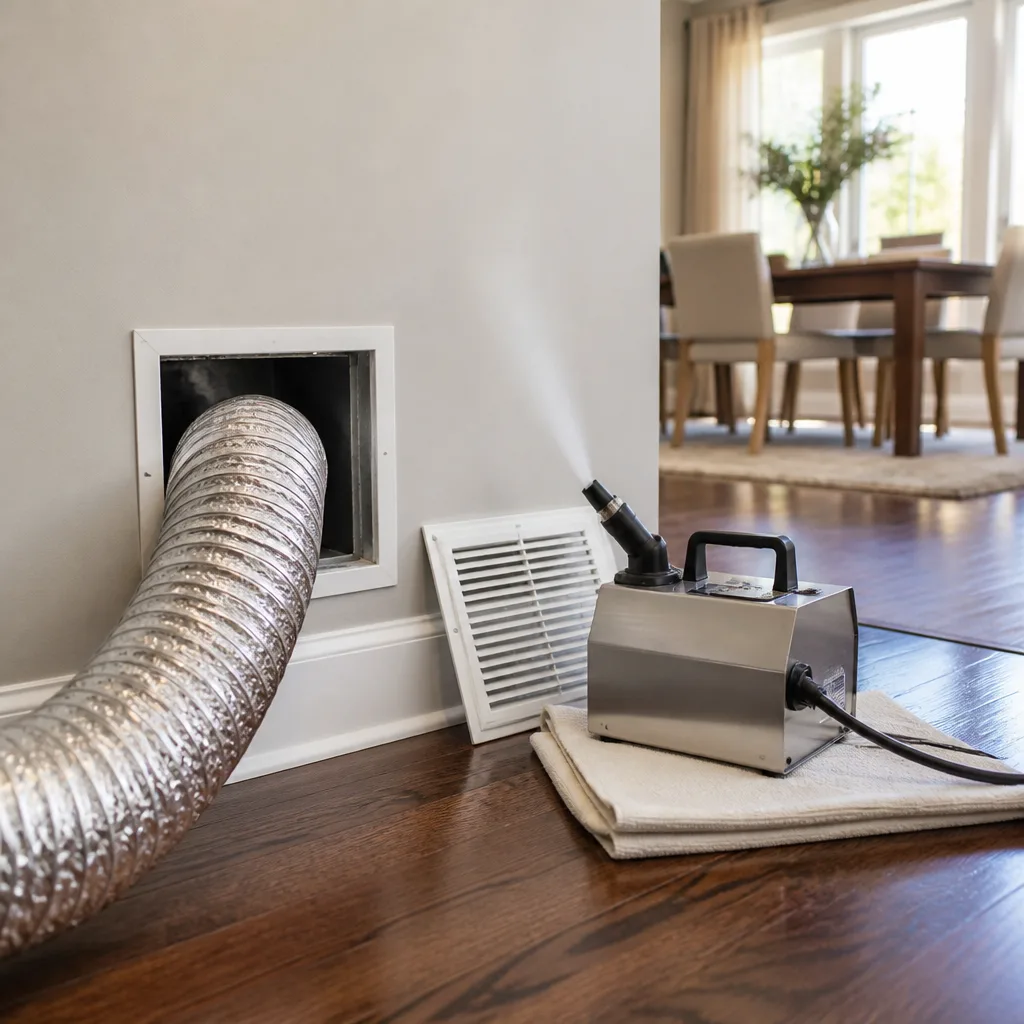 Sanitizing & deodorizing
Whole-system duct and dryer vent check with before-and-after photos - you see exactly what came out of your vents
That "$99 whole-house special" is a bait ad - the real number appears once they are in your hallway, or the "clean" is a shop-vac at the register. We photograph the inside of your ducts before and after instead.
Aprilaire Duct Sealing & Repair: The San Antonio Owner’s Guide
We stock and install Aprilaire-compatible duct sealing and repair components across San Antonio, with most whole-system sealing jobs running between $450 and $1,200 installed, depending on access and how much of your duct run needs attention. Most homeowners don’t discover a failed seal until they notice one room that never cools right, a musty smell when the blower kicks on, or dust coating the vents in one part of the house. The repair itself is usually a half-day job once we’re on site, and we carry the common Aprilaire-matching collars, mastic, tapes, and takeoff fittings on the truck so we’re not making you wait on a parts run.
Here’s what we see constantly in San Antonio: the original duct sealing done at install breaks down after five to eight South Texas summers. Attic temperatures here routinely hit 140°F in July and August, and that heat slowly hardens the mastic and tape until hairline gaps open at the boot connections. What starts as a pinhole becomes a room that never reaches setpoint, and then you’re running your AC longer to compensate, which just pulls more unconditioned attic air into the system. It’s a cycle, and it doesn’t reverse itself.
Key Takeaways
- Typical Aprilaire-compatible duct sealing and repair in San Antonio runs $450 – $1,200 installed.
- Most failures show up as uneven room temperatures, dust at specific vents, or higher summer cooling bills.
- We stock common collars, takeoffs, mastic, and foil tape that match Aprilaire duct specs.
- Every repair comes with a written price before work starts and a written 365-day guarantee.
- We are an independent provider, not affiliated with Aprilaire directly.
Which Aprilaire Models This Applies To
Aprilaire’s duct components, the sealing collars, takeoff fittings, and flexible duct connectors used on their air purification and ventilation installs, follow fairly consistent sizing across their residential line. If you have an Aprilaire 5000-series air cleaner, an 8120X ventilation system, or a 700-series humidifier tied into your ductwork, the sealing hardware we replace and repair is nearly always round metal duct in 6-inch, 8-inch, or 10-inch diameter at the connection point. The compatibility gotcha most homeowners hit is that Aprilaire’s own install kits sometimes use a slightly shallower collar depth than generic HVAC supply house parts, about 1.25 inches versus the standard 1.5 inches, which means a generic collar can sit proud of the duct and never seal flush. We match that collar depth so the repair actually holds.
Here’s the honest part about OEM versus aftermarket for Aprilaire duct components: the sealing hardware is almost never manufactured by Aprilaire themselves. It’s sourced metal and mastic, and a quality aftermarket equivalent is functionally identical as long as the dimensions match. The failure point is almost never the brand stamp on the collar. It’s the installation quality, the mastic coverage, and whether the tape was rated for attic temperatures. We use commercial-grade foil tape rated to 200°F and water-based duct mastic that stays flexible enough to survive San Antonio’s thermal swings without cracking. We also carry parts for Lennox, Trane, and Carrier systems, which matters when you’ve got a mixed-brand setup and the last tech left parts mismatched.
To identify what you need before you call, check the access panel on your Aprilaire unit for a model number sticker. Then look at the duct connection itself. If it’s round metal, measure across the opening. If it’s flex duct meeting a metal collar, check where the inner liner has pulled away or the outer jacket has torn. A photo texted to us at (430) 233-7681 is often enough for us to bring the right fitting the first time.
Styles & brands we work with
Signs Your Aprilaire Duct Sealing & Repair Is Failing
- One room won’t hold temperature while the rest of the house is fine. This is the classic signature of a failed seal at a branch duct. The conditioned air is leaking into the attic before it reaches the register, and that specific room starves.
- Dust accumulating around one or two specific vents, not all of them. When a return-side seal fails, the negative pressure pulls attic insulation, dust, and whatever else is up there into the duct and blows it through that register.
- Your cooling bill climbs in July and August with no change in thermostat settings. Split gaps at sealing points can leak 20 to 30 percent of your conditioned air into the attic. Your AC works harder, longer, and the utility company notices before you do.
- A faint musty or stale smell when the blower first starts. That’s warm, humid attic air being drawn through a gap in the return seal and pushed through the house. South Texas humidity makes this one worse than owners experience in drier climates.
- Visible gaps, dried-out mastic, or peeling tape at any accessible duct connection. In older San Antonio ranch styles, especially homes built before 1990, the original sealing material is often brittle and cracked. If you can see daylight or feel air movement at a joint with the blower running, the seal is done.
Marcus Veale puts it plainly: “Tell me what you’re seeing, and I’ll tell you whether it’s worth fixing.” Most of the time, what homeowners describe falls into one of the five patterns above, and the fix is straightforward once we open up the access point and look.
See the difference
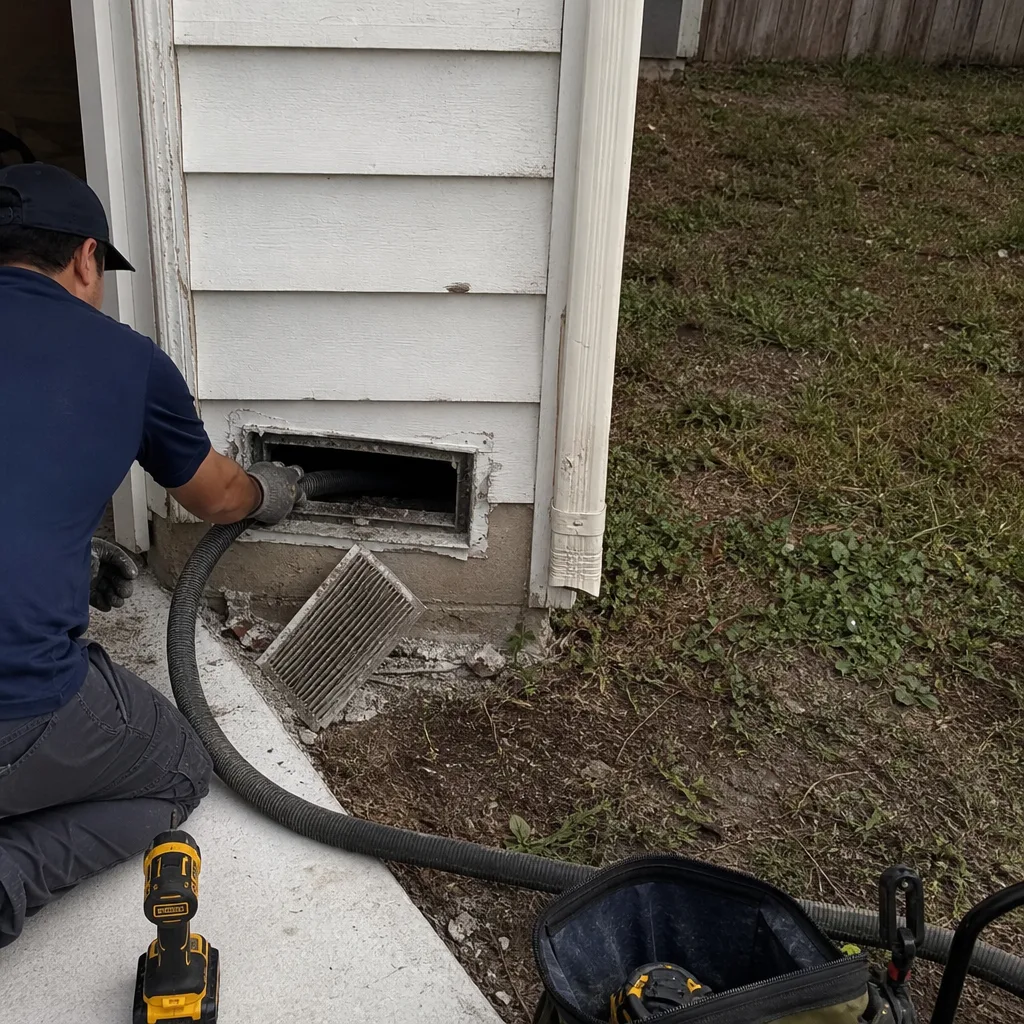 Before
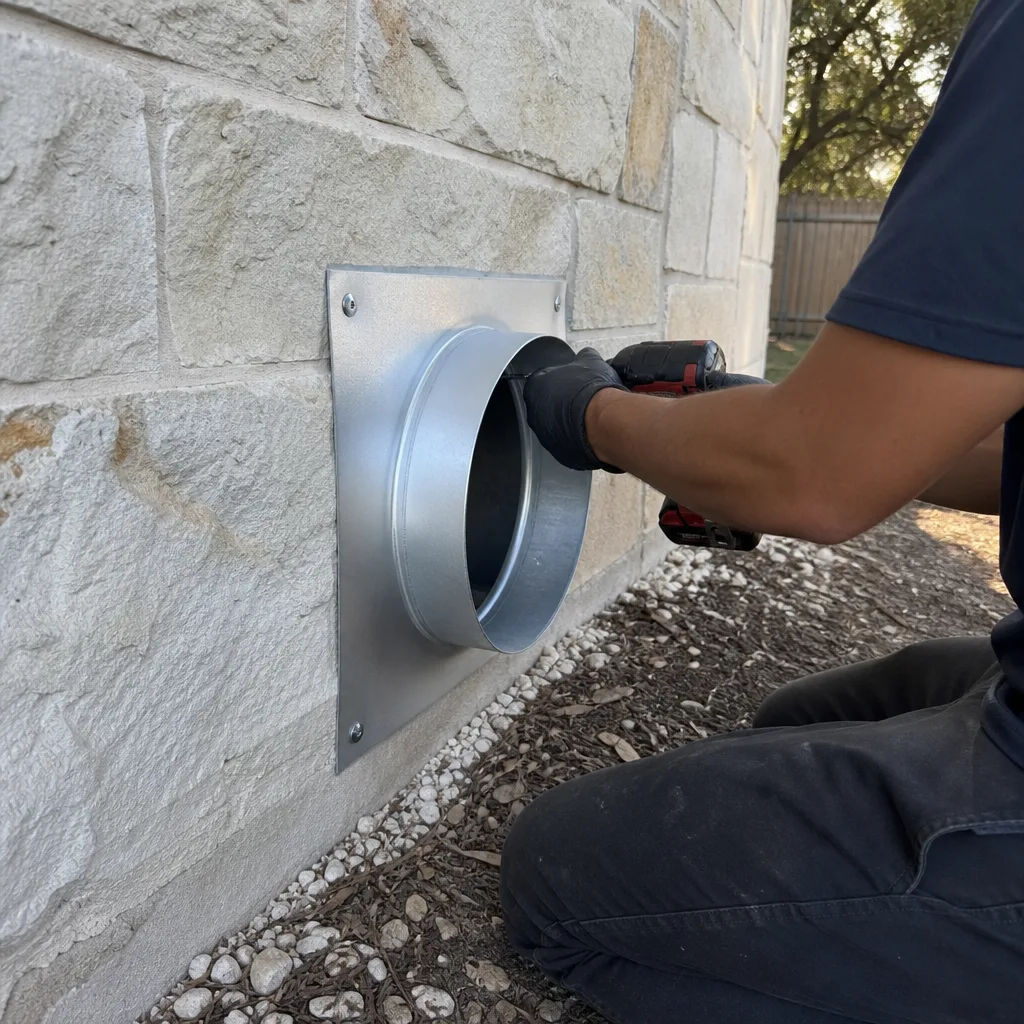 After
After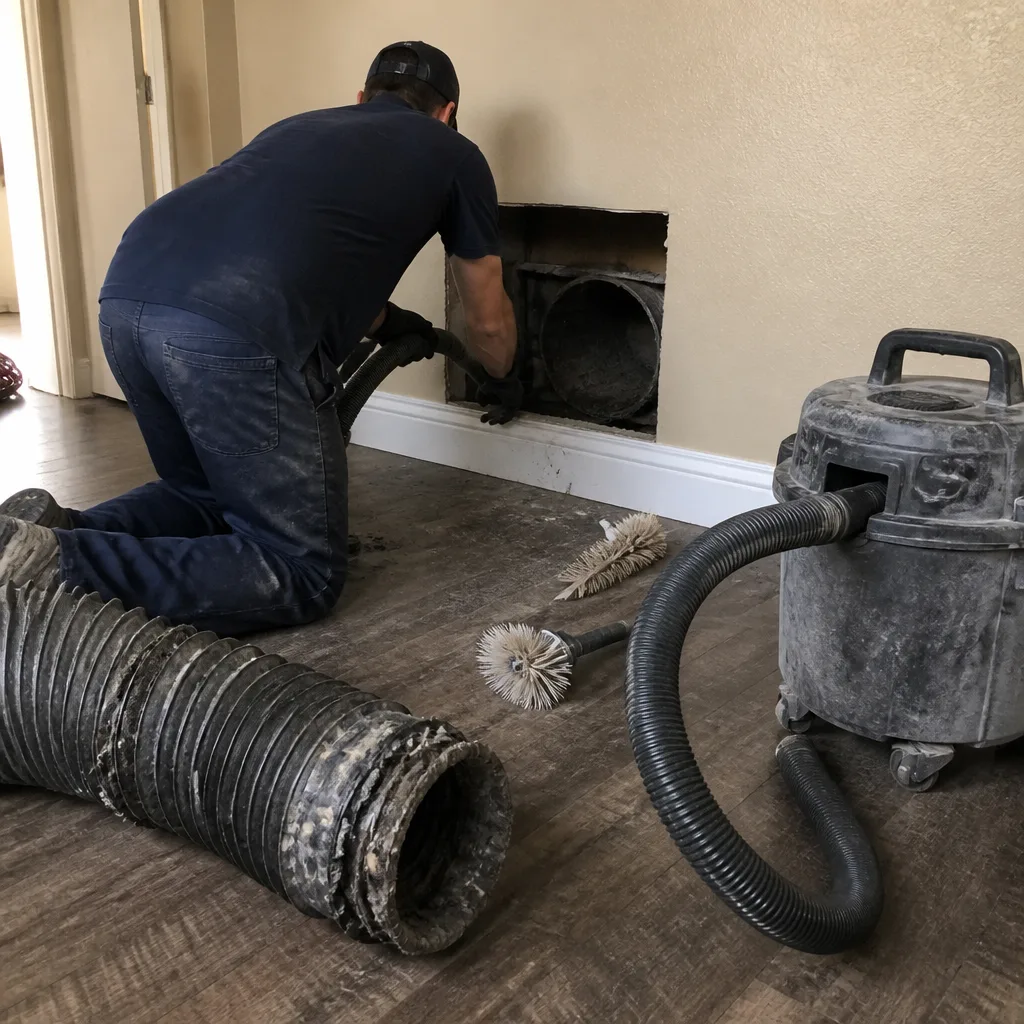 Before
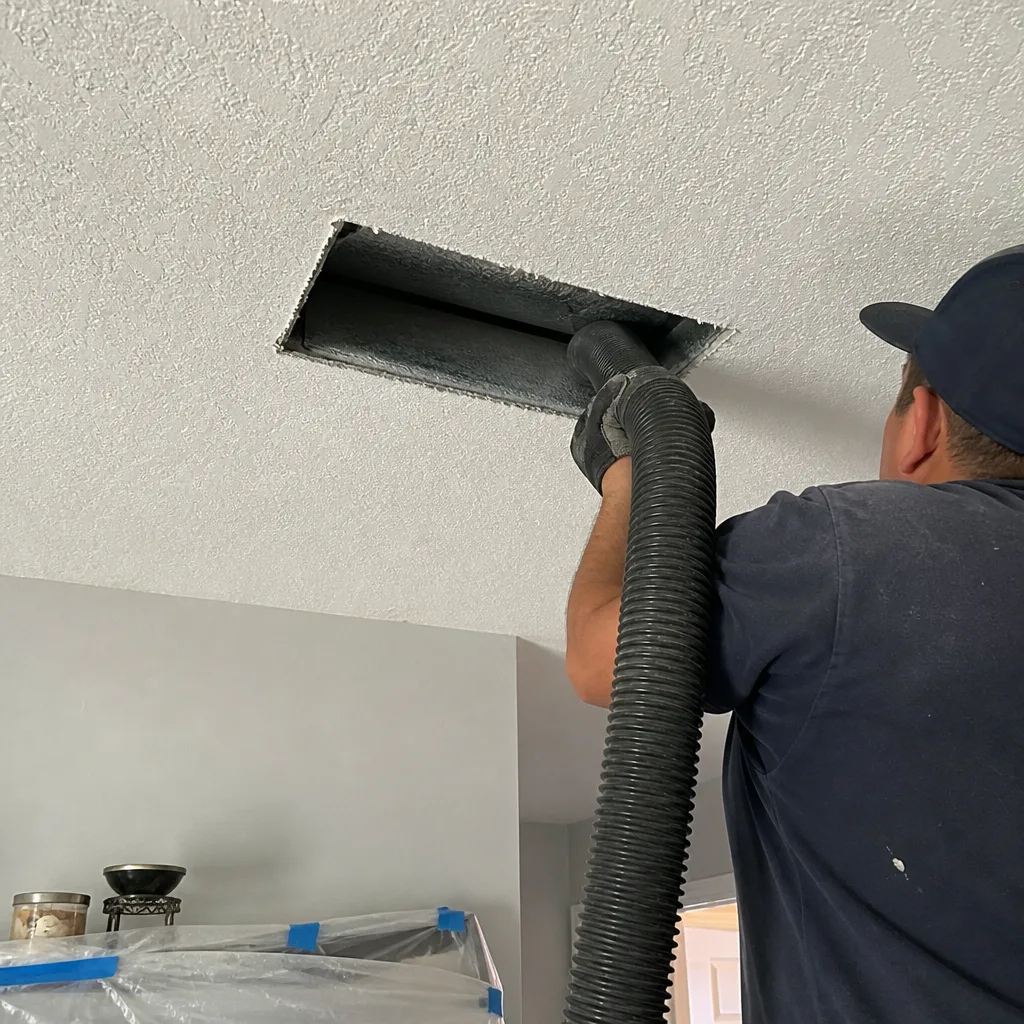 After
After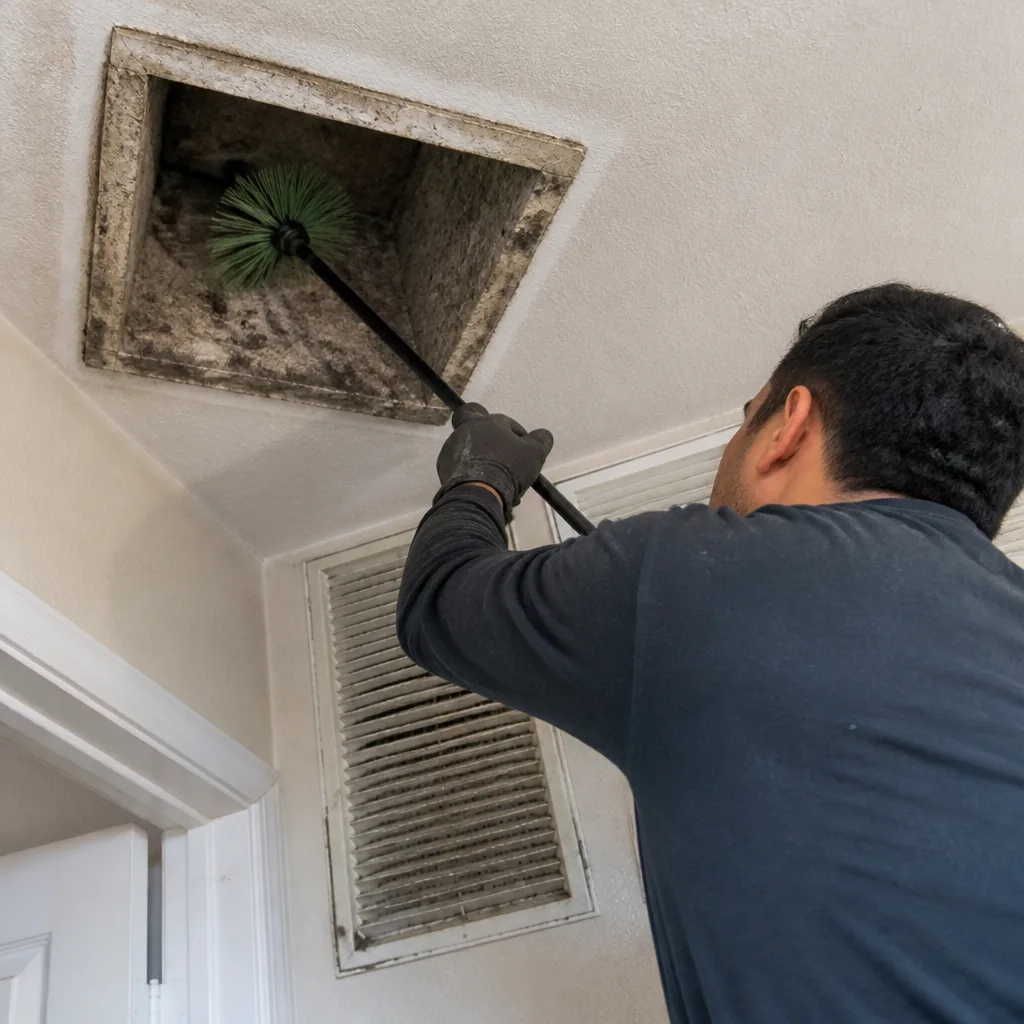 Before
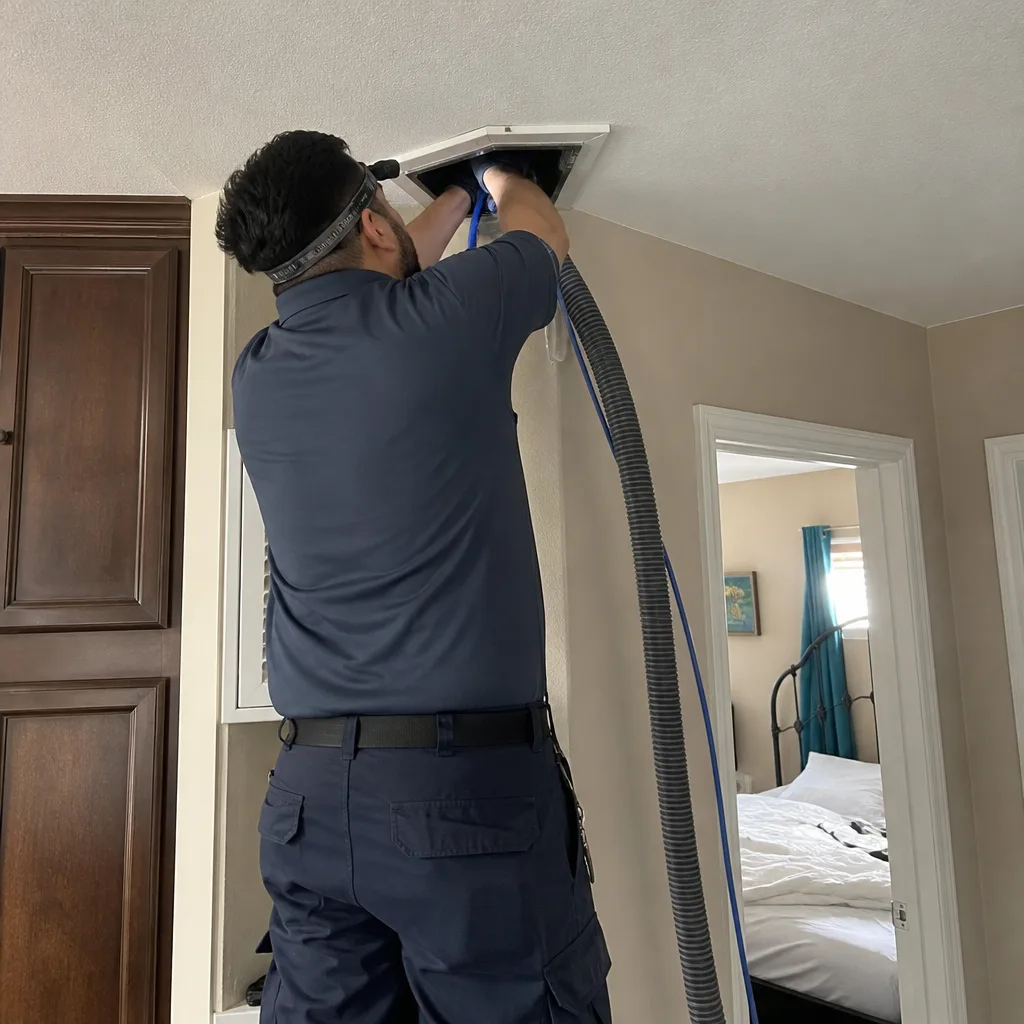 After
AfterReplacement Cost & What’s Included
For Aprilaire-compatible duct sealing and repair in San Antonio, you’re looking at $450 to $1,200 installed for a complete job, and the range mostly comes down to two things: how many connections need re-sealing and whether the ducts are in an accessible attic or a tight crawlspace. A single failed boot connection might run toward the lower end. Re-sealing every accessible joint on a full system, including the plenum box, all takeoffs, and the return chase, lands on the upper end. We give you the exact price in writing before any work starts, and that’s the price you pay. No per-vent add-ons, no surprise invoice after the fact, no “while we were in there” upsell.
Every repair includes the sealing material itself, any replacement collars or takeoff fittings needed, labor, and cleanup. Every Linden Air Duct San Antonio repair carries a written 365-day guarantee. If a covered seal fails within that year, we come back at no charge and make it right. That’s a standing commitment on every job we do, not a promotion.
DIY or Call Us?
The sealing work itself isn’t dangerous in the way garage springs or electrical panels are. It’s messy, awkward, and physically demanding, but it won’t hurt you if you’re careful. The honest split is this: you can safely check for obvious gaps, run your blower and feel for air movement at accessible joints, and even take photos of the damaged areas. What goes wrong with DIY duct sealing is usually access. San Antonio attics in summer are dangerous places to work, full stop. Attic temperatures exceed 130°F by mid-morning from June through September, and heat exhaustion hits fast when you’re on your back reaching into a tight corner. If your ducts are in a hot attic, a crawlspace with limited clearance, or behind finished walls, that’s a job for someone with the right equipment and the right ventilation plan.
We’ve also pulled enough half-finished DIY jobs out of attics to know that what homeowners typically miss is the prep work: cleaning the joint surface so the mastic actually bonds, using the right tape for high-temperature attics, and getting full coverage around the back of the fitting where you can’t see. A seal that looks fine from the front and leaks from the back is still a leak. If you’re in a hot attic or you’re not sure about the access, call (430) 233-7681 and we’ll take it from there.
FAQs
Quality sealing done with high-temperature mastic and foil tape should last 10 to 15 years in the San Antonio climate, though extreme attic heat cycles in older homes can shorten that to 8 to 10 years. If a seal fails before that, it was usually an installation or material problem, not normal wear. Call (430) 233-7681 and we’ll inspect your system and tell you exactly what’s failing and why.
Yes, and that’s what we do in most cases. If the metal components are intact and the failure is cracked mastic, failed tape, or a gap at the connection point, the repair is a clean-and-re-seal job. We only replace components when the metal itself is damaged, crushed, or rusted through, which happens more often in San Antonio’s humid crawlspaces than in attics.
A typical duct sealing repair on an Aprilaire-connected system takes three to five hours, depending on how many connections need attention and how accessible the ductwork is. Single-connection repairs are often done in under two hours. We’ll give you a clear window when you schedule, and the price is locked before we open the first access panel.
We stock the common sizes and fittings that match Aprilaire duct specs, including 6-inch, 8-inch, and 10-inch collars, takeoffs, foil tape, and water-based mastic on every truck. For unusual configurations or older Aprilaire models with non-standard connections, we may need a same-day parts run, but we’ll tell you that before we schedule so there are no surprises. Call (430) 233-7681 with your model number and we’ll confirm what we need to bring.
Written by Marcus Veale, Owner, Linden Air Duct San Antonio at Linden Air Duct San Antonio, serving San Antonio and nearby areas.